!symbol
A glyph in a run of canvas text, sitting on the line like a letter.
On this page
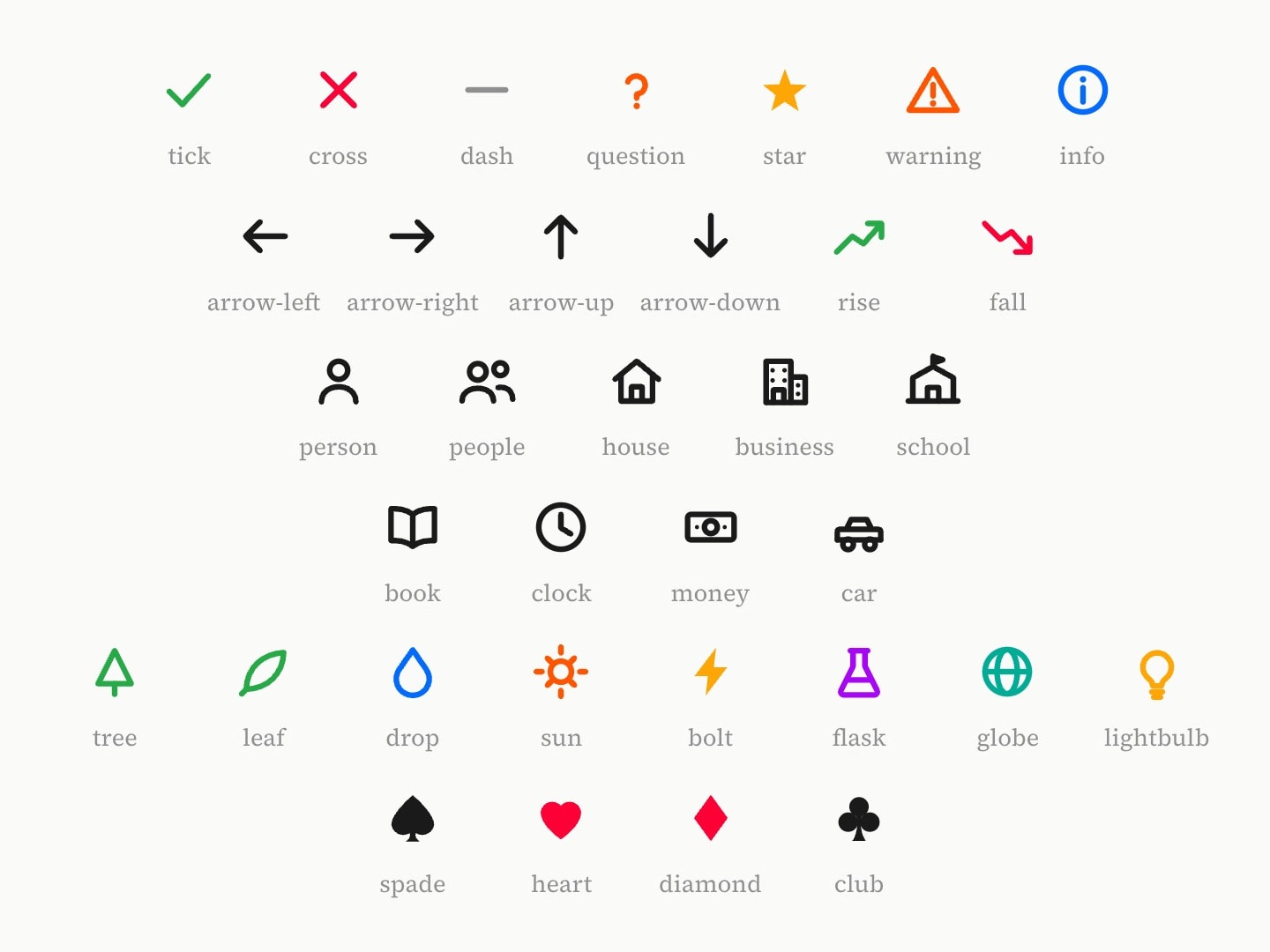
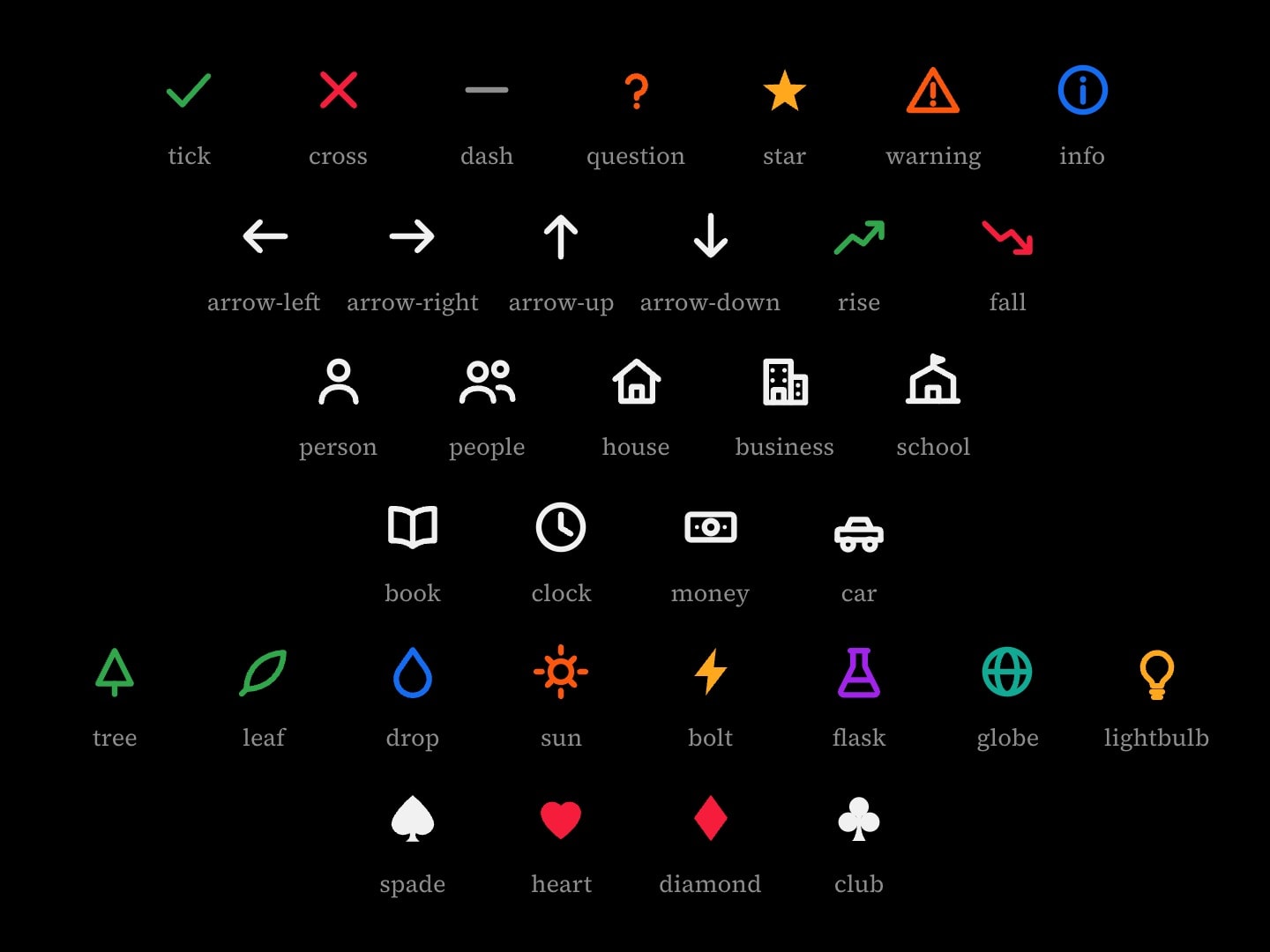
#Attributes
nameWhich glyph is drawn: one of the thirty-four names listed below.
tickcrossdashquestionstarwarninginfoarrow-rightarrow-leftarrow-uparrow-downrisefallpersonpeoplehousebusinessschoolbookclockmoneycartreeleafdropsunboltflaskglobelightbulbspadeheartdiamondclub!symbol:valuecolourThe glyph's colour.
neutral takes the colour of a mark's label, and the body-text colour elsewhere.paintAlso written:
colorDefault
neutral#Examples
table{
    Suit | Cards in a deck
    !symbol:heart(colour: red) | 13
    !symbol:spade() | 13
}point(x: 3; y: 4; label: !symbol:tick(colour: green) correct)text(label: !symbol:house(colour: teal); x: 2; y: 1)#Notes
- It goes wherever canvas text does, such as a table cell, a list item or a mark's label, and fills one em square.
- The brackets are required:
!symbol:tickwith no bracket after it is prose and prints as typed. - The thirty-four names: the marks a piece of work is marked with (
tick,cross,dash,question,star,warning,info); direction and change (arrow-right,arrow-left,arrow-up,arrow-down,rise,fall); people and places (person,people,house,business,school); everyday things (book,clock,money,car); science and nature (tree,leaf,drop,sun,bolt,flask,globe,lightbulb); and the card suits (spade,heart,diamond,club). Any other name is refused with the list. - Canvas-only: anywhere in a scene's narrative it is a compile error (
narrative/canvas-only-micronode): '!symbol' is not allowed in the narrative; colour, highlighting and symbols belong in the canvas. - A colour micronode around the glyph does not colour it: with
colouratneutralit still takes the colour of the mark's label it sits in, or the body-text colour in a table cell or canvas paragraph. - Each glyph carries its name as an accessible label, so a screen reader reads a cell holding only a symbol.