cue
Presence on the timeline: what it wraps fades in at its in: anchor and out at its out: anchor. The rest of the cue family nests inside it — a highlight or a trace acts on content a cue has already brought in.
cue
Writing with it:
#Attributes
inAnchor: a step index (1), a time (1.5s), or a compound offset (1 + 500ms). Reveals at this anchor.
Can be written as shorthand:
cue:valueDefault
noneoutAnchor: a step index (1), a time (1.5s), or a compound offset (1 + 500ms). Hides at this anchor.
Default
nonein-durationIn animation duration (ms).
Also written:
durationDefault
500msout-durationOut animation duration (ms).
Default
500mseasingEasing function.
linearsmoothDefault
smoothsequentialDefault
false#Allowed content
Body { }
cue.highlightcue.spotlightcue.traceparagraphh1h2h3h4listimageequationquestionsliderselectorcue.slidercue.selectorlinepolygoncurvecirclesquarerectangletrianglestardiamondhexagonvectorsegmentbraceanglepointtextaxis.labelaxis.braceaxis.bandaxis.breakscatterhistogrambarlollipopboxplotdensityviolinheatmapfitintegralresidualscontoursurfacefieldlinesregionchoroplethmarkerarcboxarrowpinvertexedgeverticesedgespath#Allowed in
#Examples
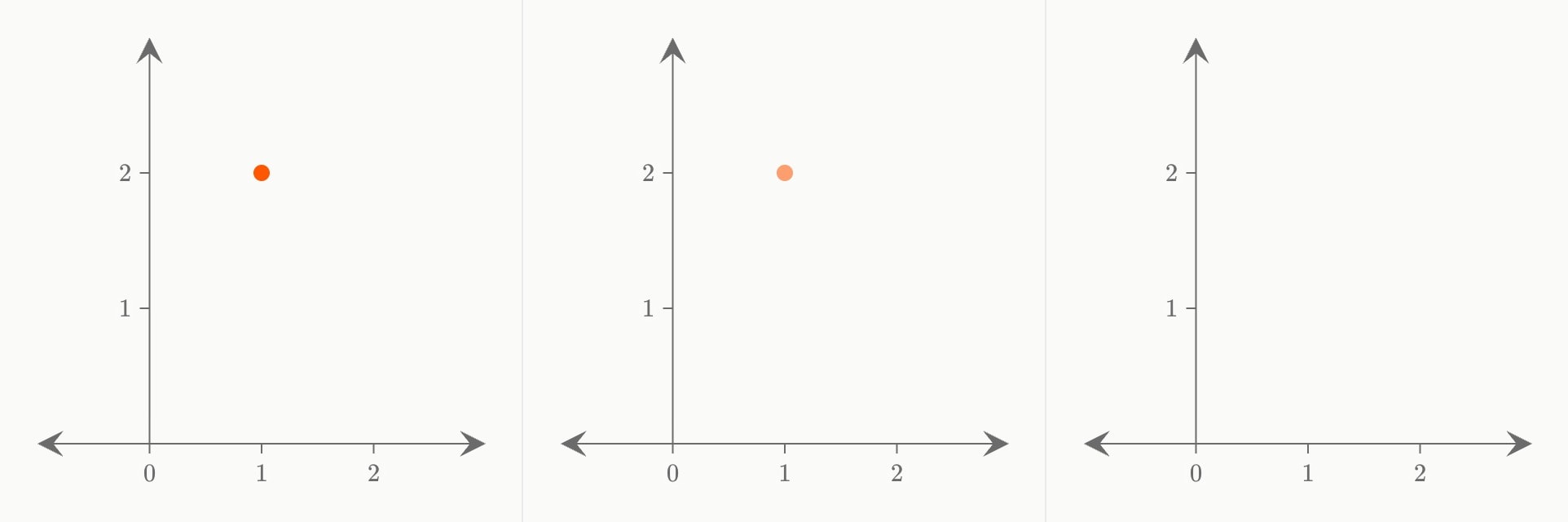
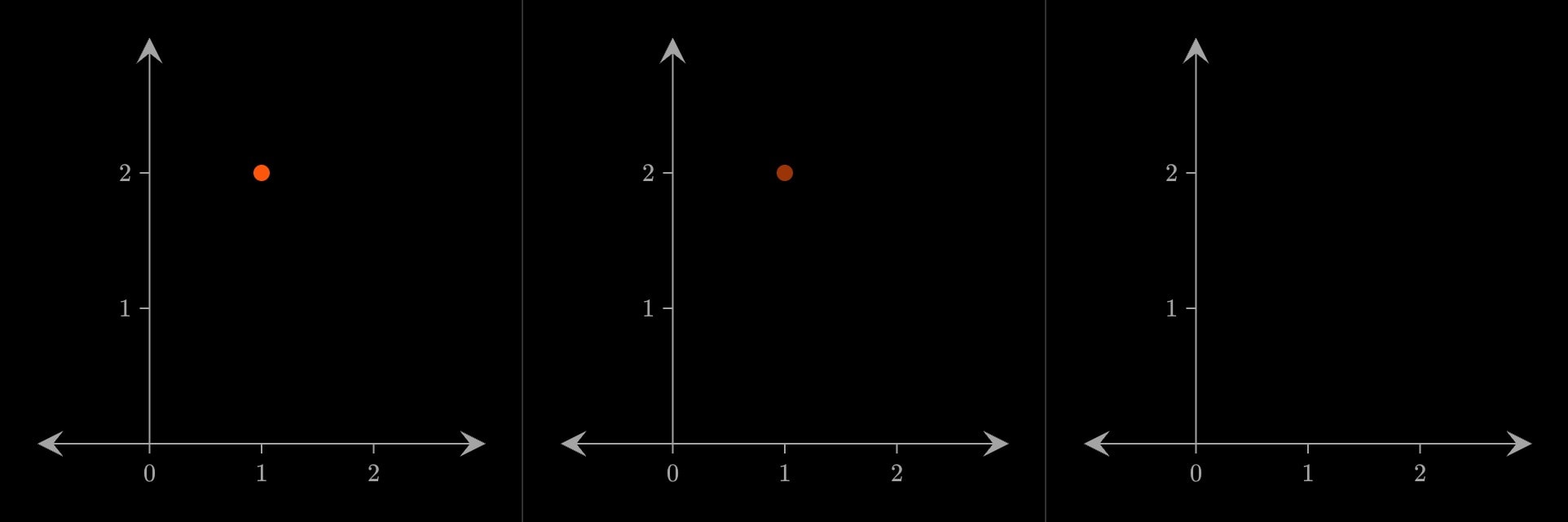
canvas.graph{
    cue{
        point(x: 1; y: 2)
    }(
        in: 1
        out: 3
    )
}(
    x-domain: [-1, 3]
    y-domain: [0, 3]
)

cue{
    Reveal this text
}(
    in: 2
)