path
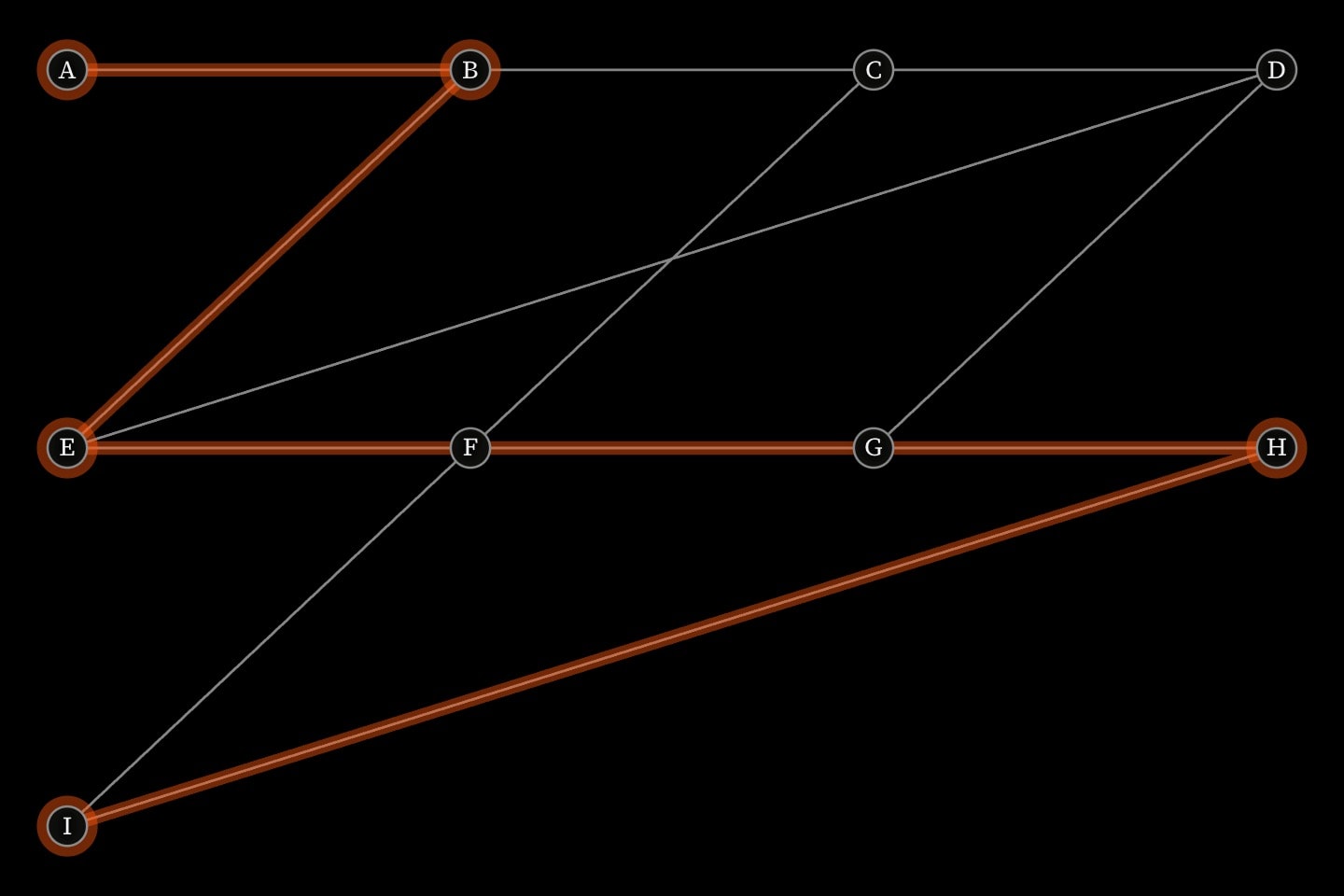
The shortest route through the network, visiting the vertices through: names in turn: path(through: #a, #f) is the shortest path from a to f, and path(through: #a, #c, #f) the shortest from a to c and on to f. Weighted when the network's edges carry weights, and one-way on a directed network. Drawn as a broad stroke over the edges it takes and under the vertices it visits; under cue.draw it strokes in hop by hop. Where some leg has no route, nothing is drawn and nothing is derived.
path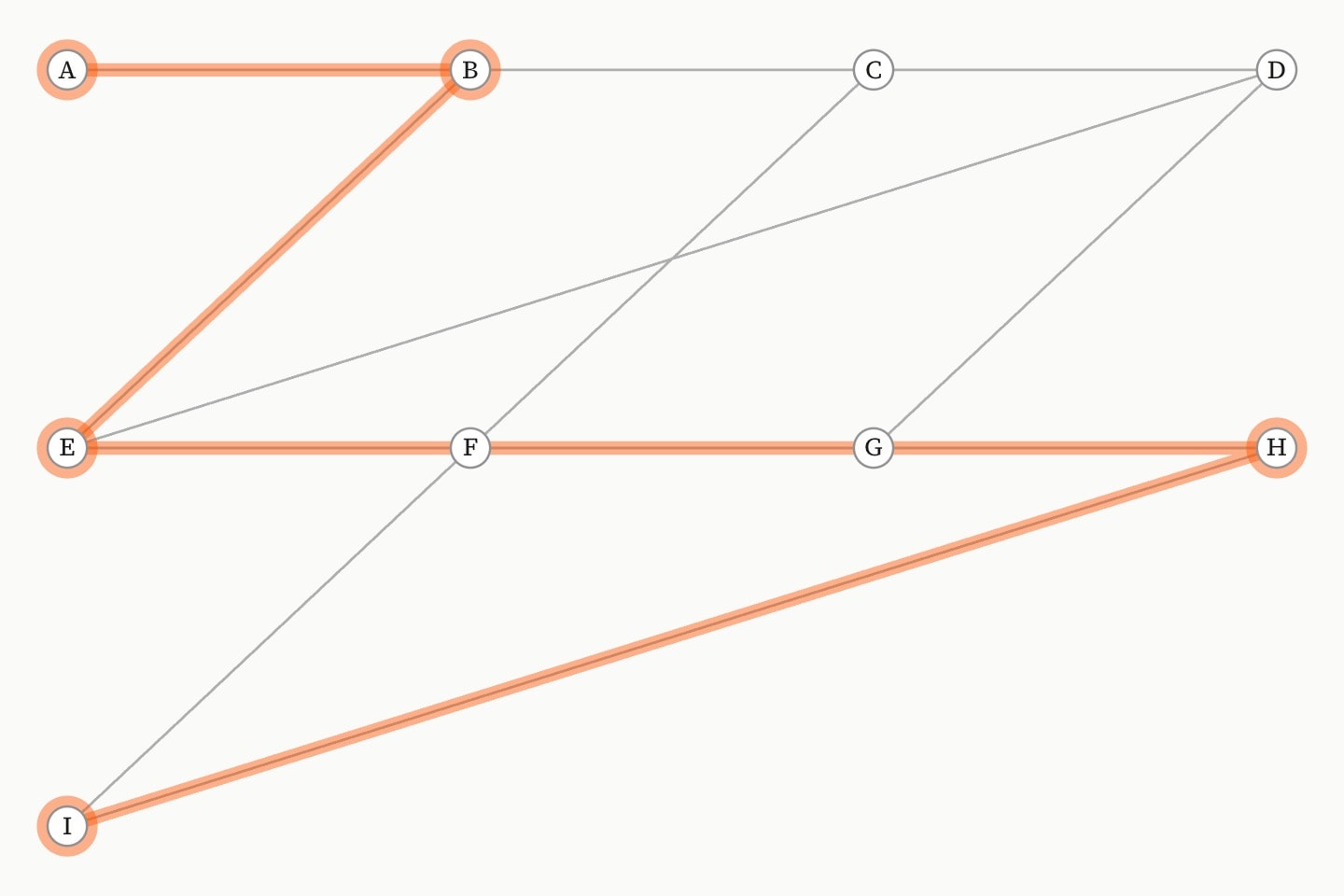
#Attributes
throughThe vertices visited, in order, as
#ids: at least two.network-refsCan be written as shorthand:
path:valuecolourThe stroke's hue.
bluelight-bluedark-blueredlight-reddark-redorangelight-orangedark-orangeyellowlight-yellowdark-yellowteallight-tealdark-tealgreenlight-greendark-greenpinklight-pinkdark-pinkpurplelight-purpledark-purplegreylight-greydark-greyneutralhex(…)rgb(…)colorDefault
orangehiddenDeclared but not drawn. It still derives its length. Animatable.
Default
false#Derived attributes
Computed while the element renders — read one with #id.name in attribute position or {{#id.name}} in prose, never set.
lengthThe summed weight of the edges taken — the hop count on an unweighted network.
hopsHow many edges the path takes.
#Allowed in
#Examples
path#route(through: #a, #f)cue.draw{
path(through: #london, #paris, #rome; colour: teal)
}(
in: 2
)