polyhedron
A solid with flat faces: the convex hull of its vertices, or one of the five regular solids by name.
polyhedronOnly with
xyzplane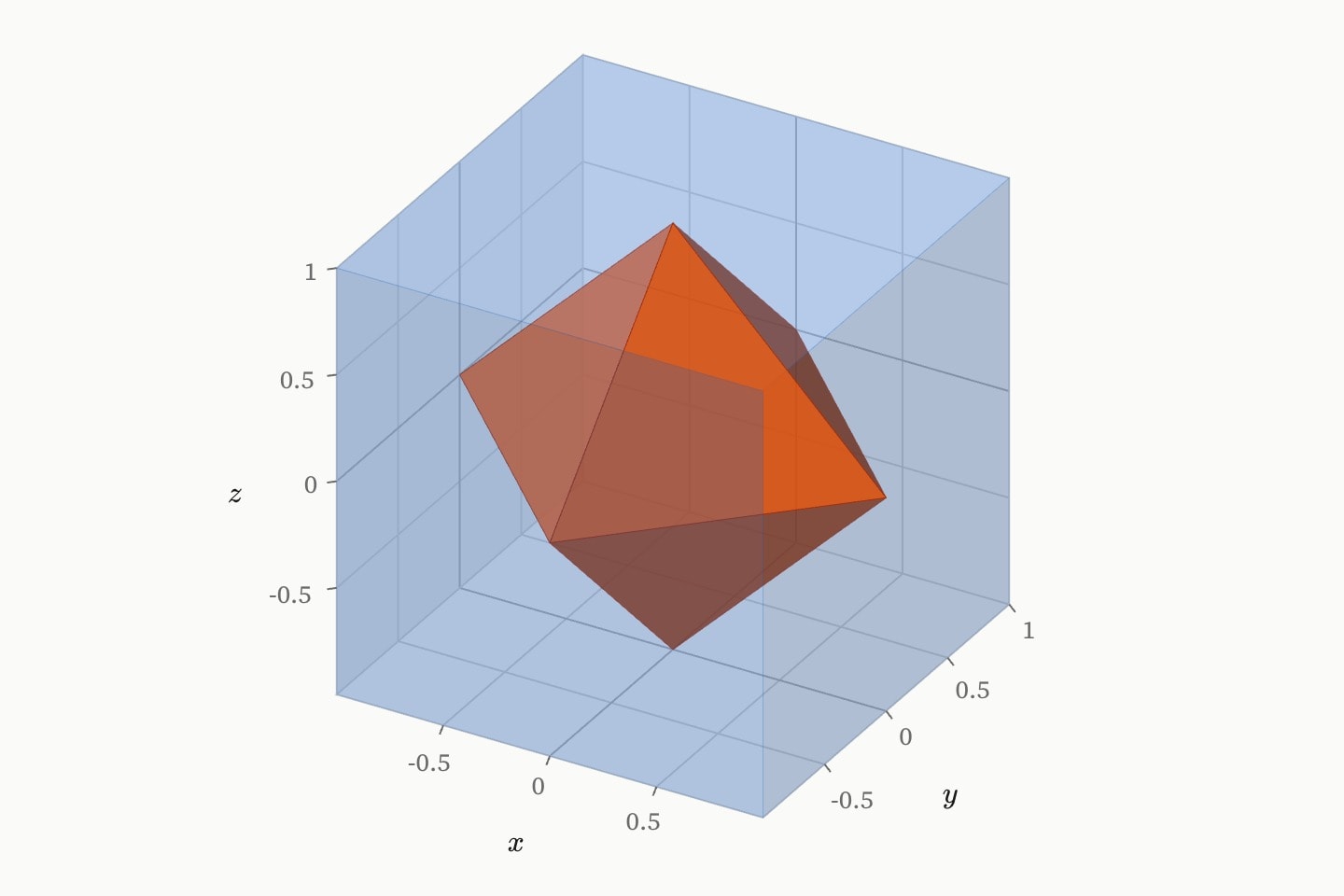
#Attributes
xThe vertices' x coordinates, paired with
y: and z: by position. Points inside the hull are left out of it. Not with shape:.yThe vertices' y coordinates.
zThe vertices' z coordinates.
shapeWhich regular solid it is, by name: tetrahedron, cube, octahedron, dodecahedron or icosahedron. Not with
x:, y: and z:.tetrahedroncubeoctahedrondodecahedronicosahedronpolyhedron:valueatWhere a regular solid is centred,
(x, y, z) — the origin when not given. Only with shape:.Also written:
centre, centersizeHow far a regular solid's vertices are from its centre.
Also written:
radiusDefault
1meshThe hairline along every edge;
!mesh leaves the faces to meet on their shading alone.Default
truecolourIts colour — teal when not given. Faces are shaded in steps of the hue by how squarely they face a light fixed to the camera.
colourAlso written:
colorDefault
tealopacityHow solid it is, 0 to 1.
Default
0.85labelWords drawn beside it, over everything.
hiddenDeclared but not drawn — animatable, so
hidden: true !cue.to{false}(at: 2) is its reveal.Default
falselockA reader may not edit it.
Also written:
lockedDefault
falselayerAccepted for parity with the flat marks; in space the paint order is depth.
groupThe groups this mark belongs to, comma-separated:
group: Early sown, Projected. It is drawn in the colour of the first that has one and the stroke of the first the graph's key: gives one, over its own colour: and dashed, and the footer's key names every group.#Derived attributes
Computed while the element renders — read one with #id.name in attribute position or {{#id.name}} in prose, never set.
#Allowed in
#Examples
graph:xyz{
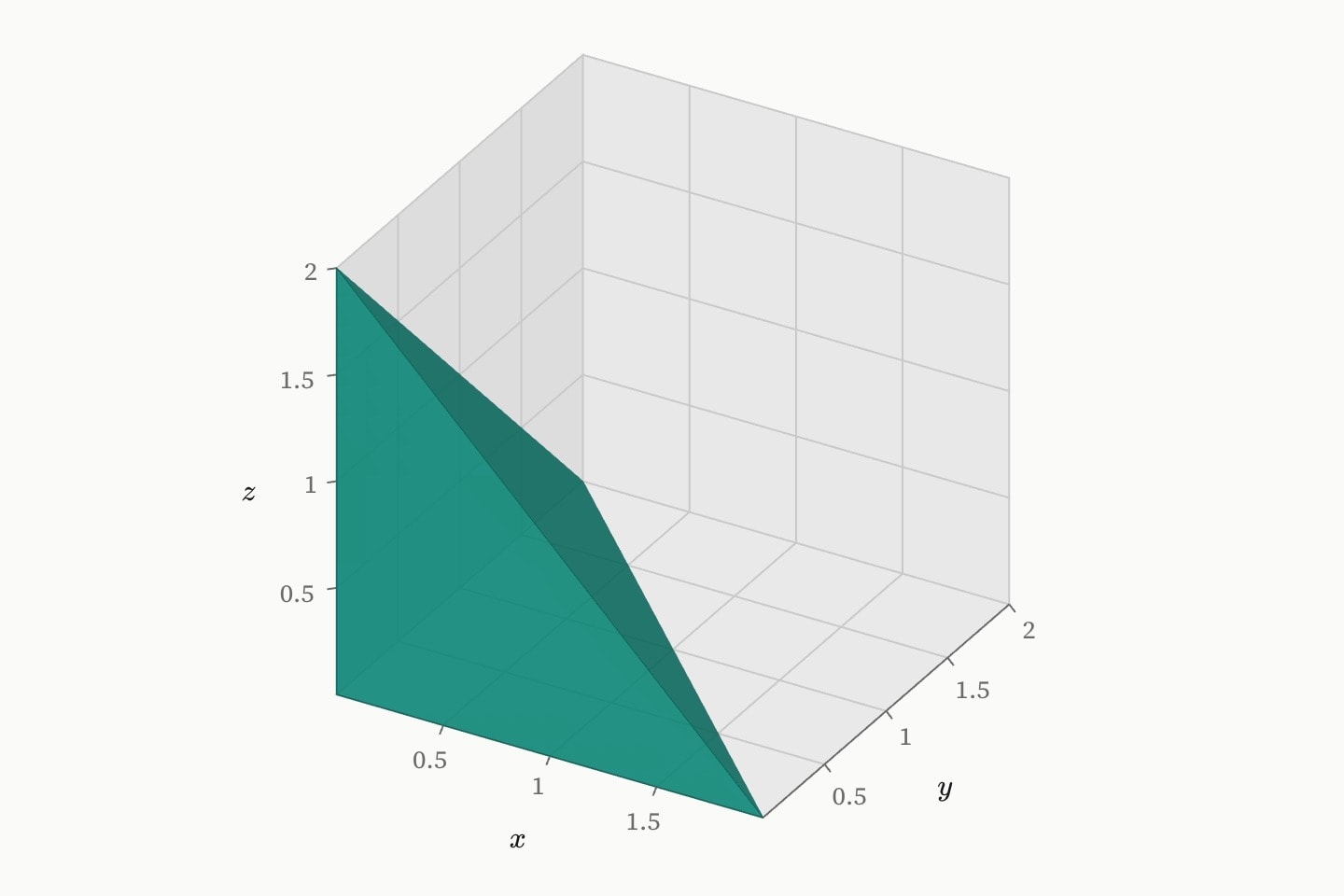
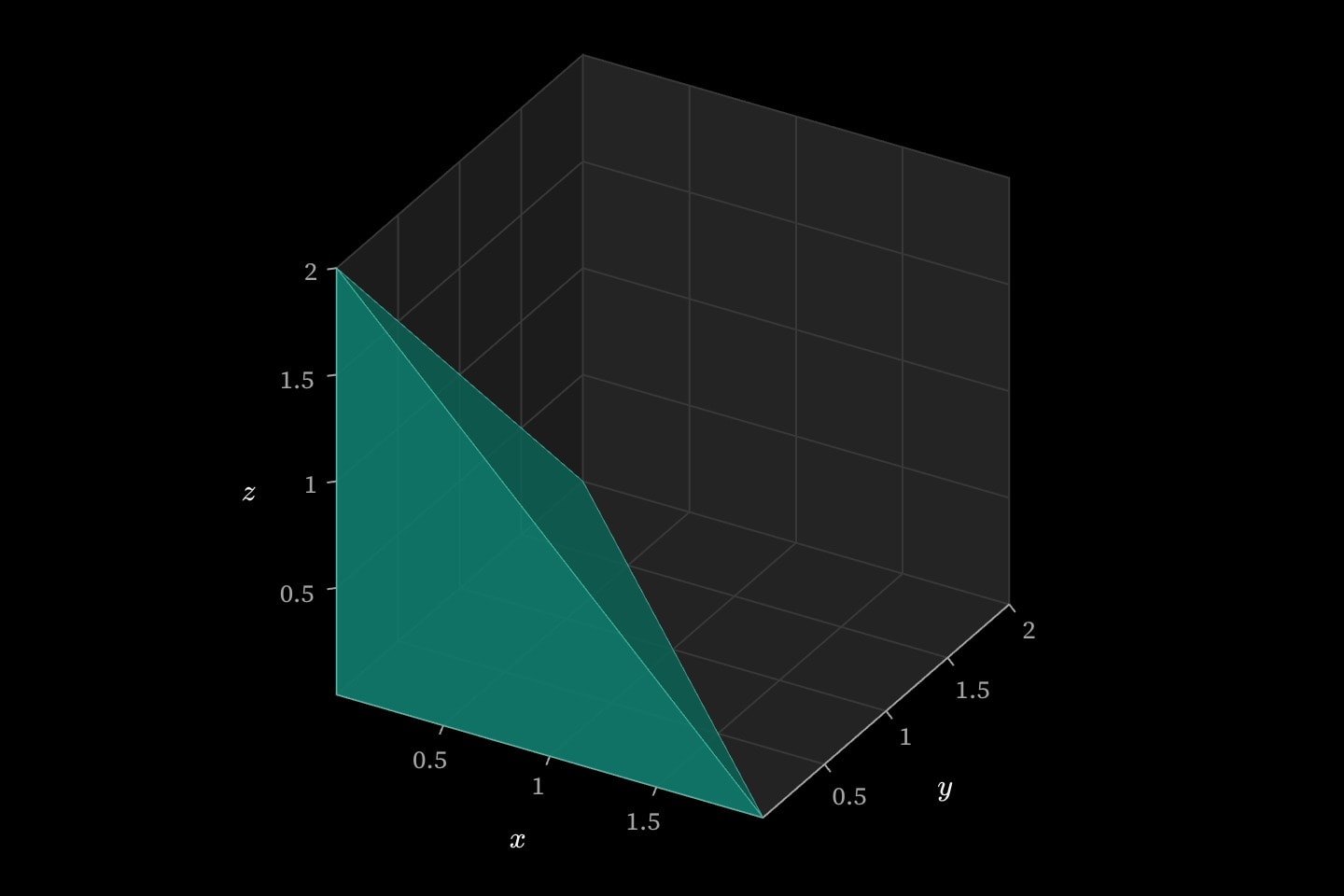
    polyhedron(x: 0, 2, 0, 0; y: 0, 0, 2, 0; z: 0, 0, 0, 2)
}(
    x domain: [0, 2]
    y domain: [0, 2]
    z domain: [0, 2]
    aspect: equal
)
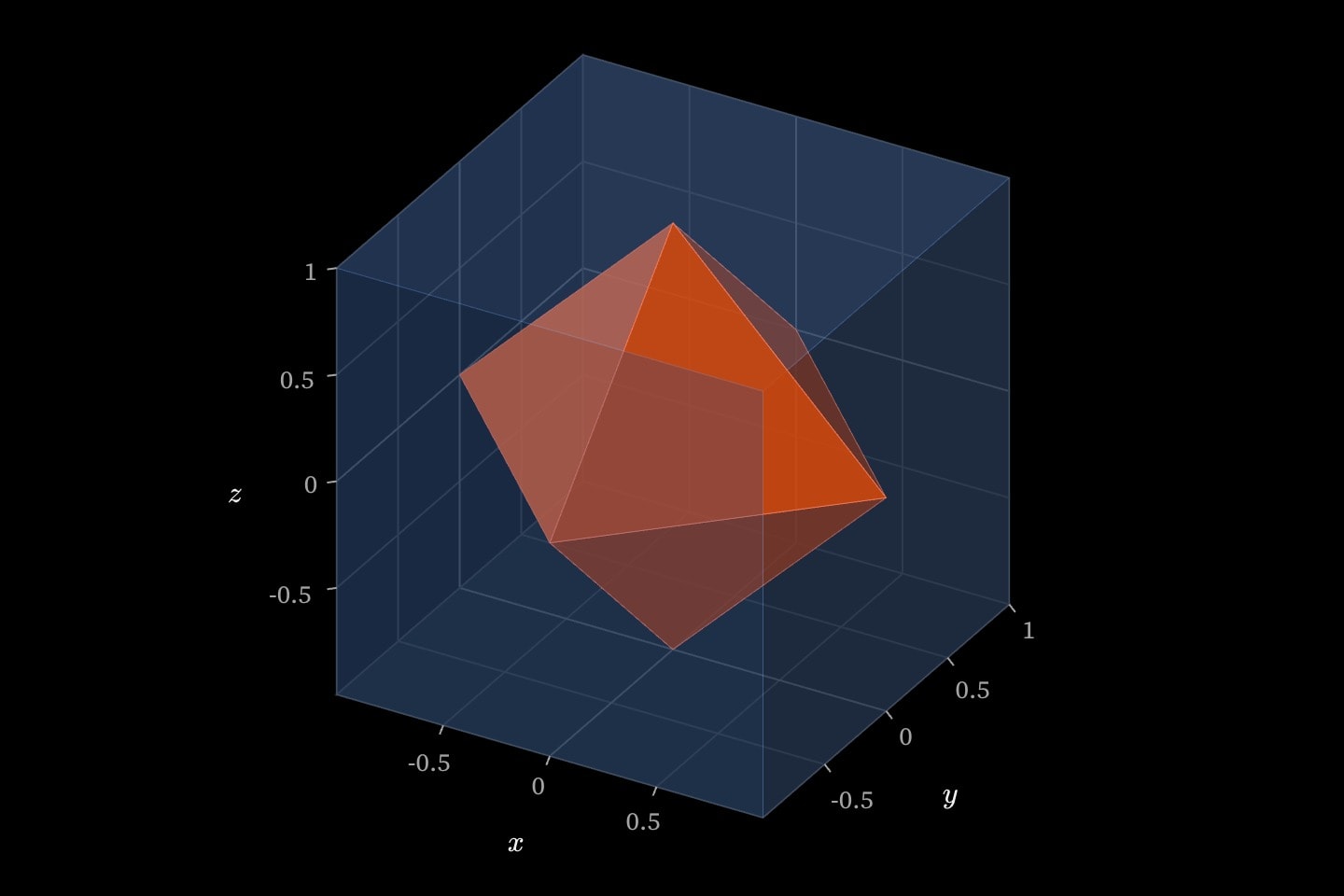
graph:xyz{
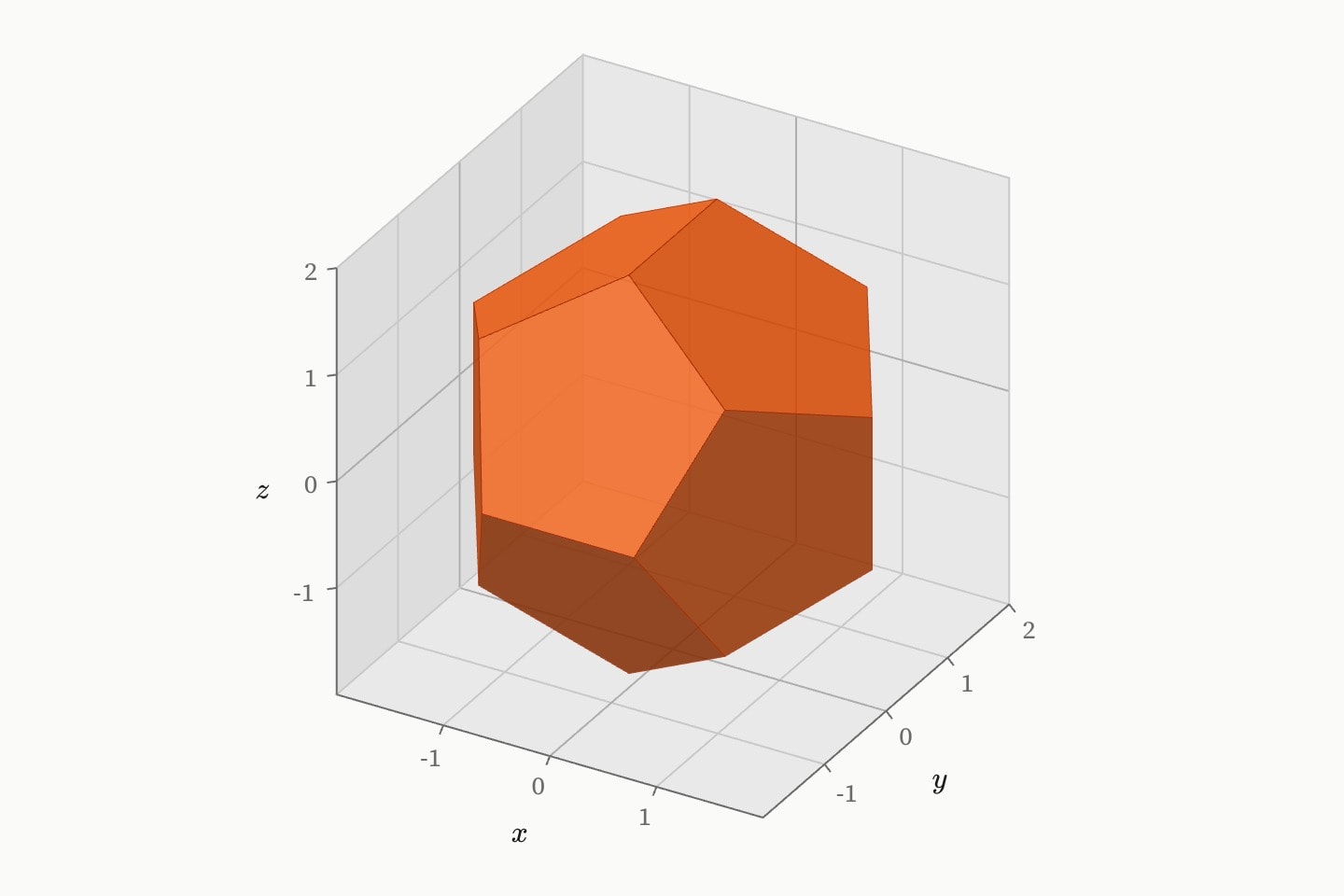
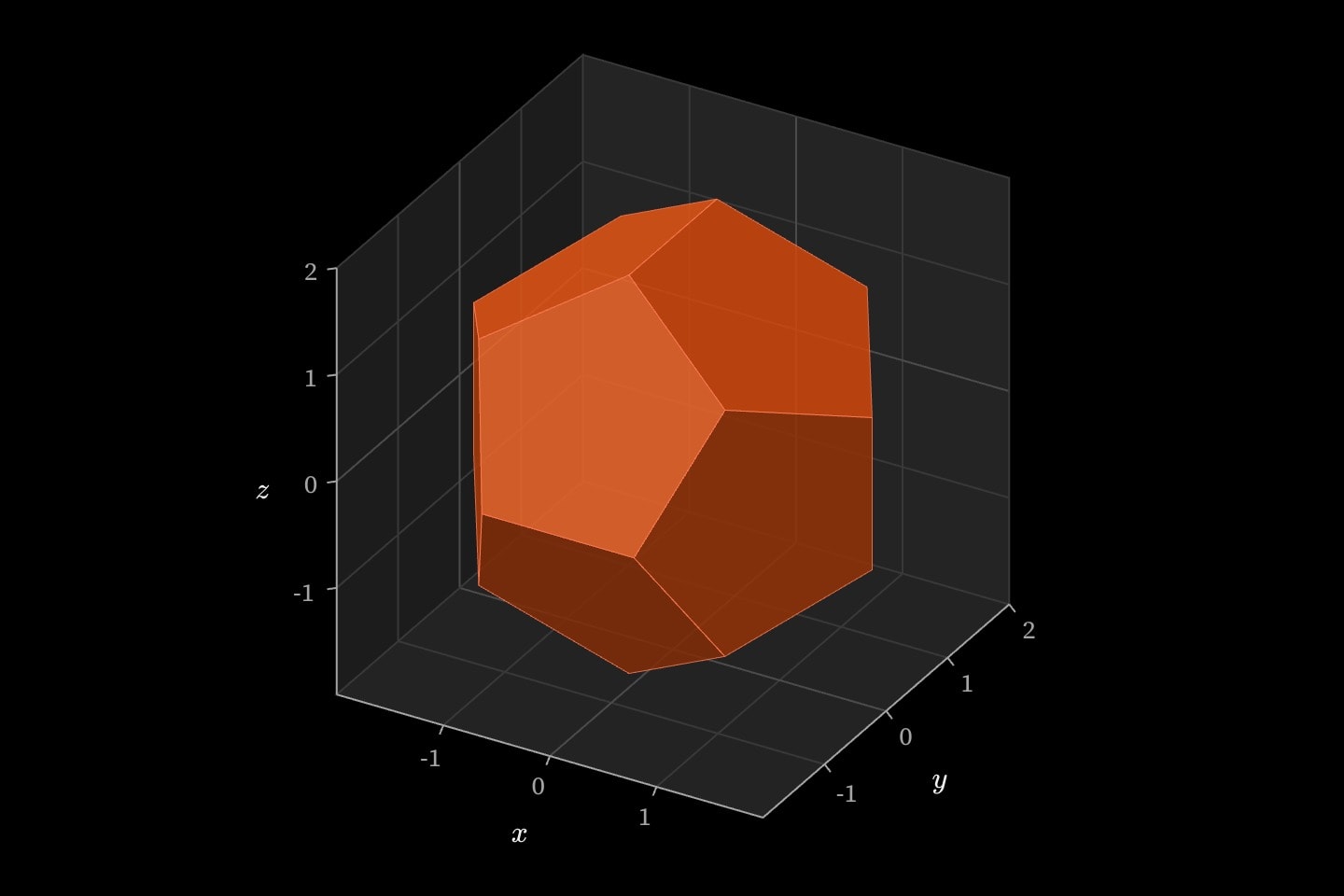
    polyhedron:dodecahedron(at: (0, 0, 0); size: 2; colour: orange)
}(
    aspect: equal
)#Notes
- Vertices, one list per axis:
polyhedron(x: 0, 2, 0, 0; y: 0, 0, 2, 0; z: 0, 0, 0, 2). A regular solid by name:polyhedron:dodecahedron(at: (0, 0, 0); size: 2). - Faces are shaded, and the ones turned away are hidden.
- It is drawn in the data's own units, so a regular solid looks regular only under
aspect: equal. - Space only (
graph:xyz).