grid
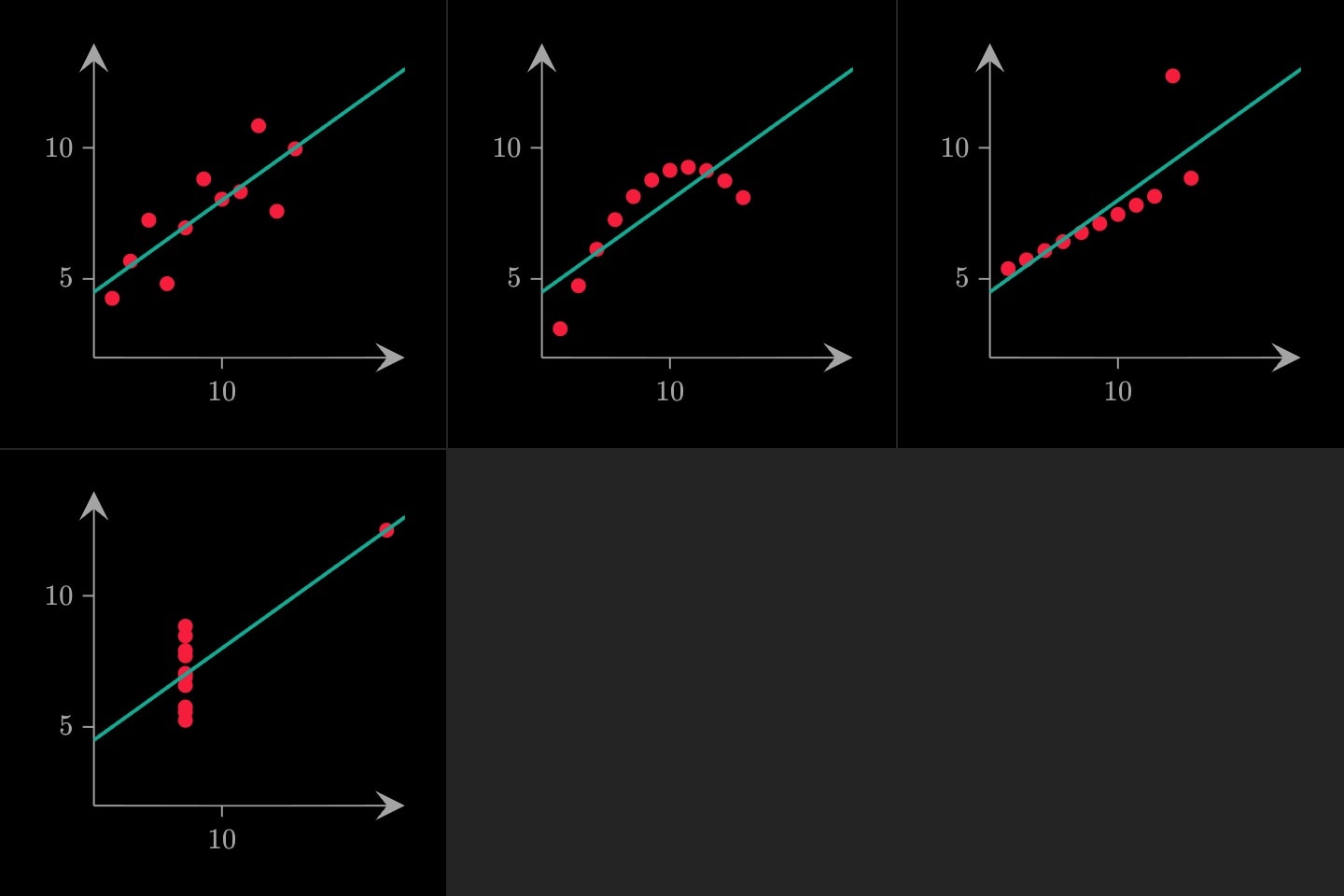
A scene's canvas laid out in rows and columns, up to three by three: small multiples — Anscombe's four sets side by side, a residual plot beside its QQ plot — or two panes side by side whatever the width, where a plain split would stack them. Its body holds only canvas environments, read across then down; a scene with a grid holds all its environments in it. Each pane keeps its own frame, cues and steps, and the scene's parameters reach every one.
grid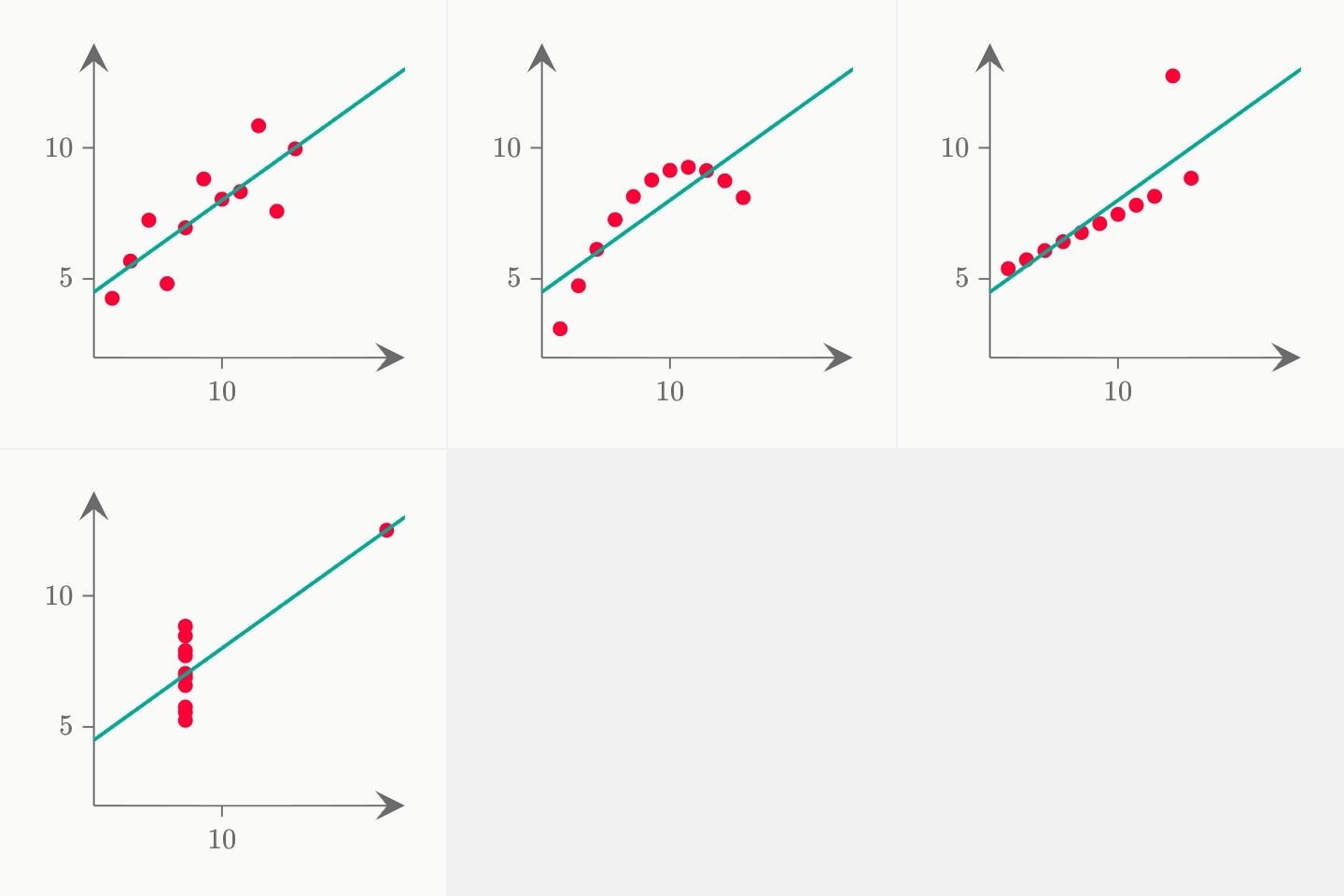
#Attributes
columnsHow many panes across. Unwritten, the layout nearest square: one for one pane, two for up to four, three past that. The head form —
grid:3{…}.123enumCan be written as shorthand:
grid:value#Allowed content
#Allowed in
#Examples
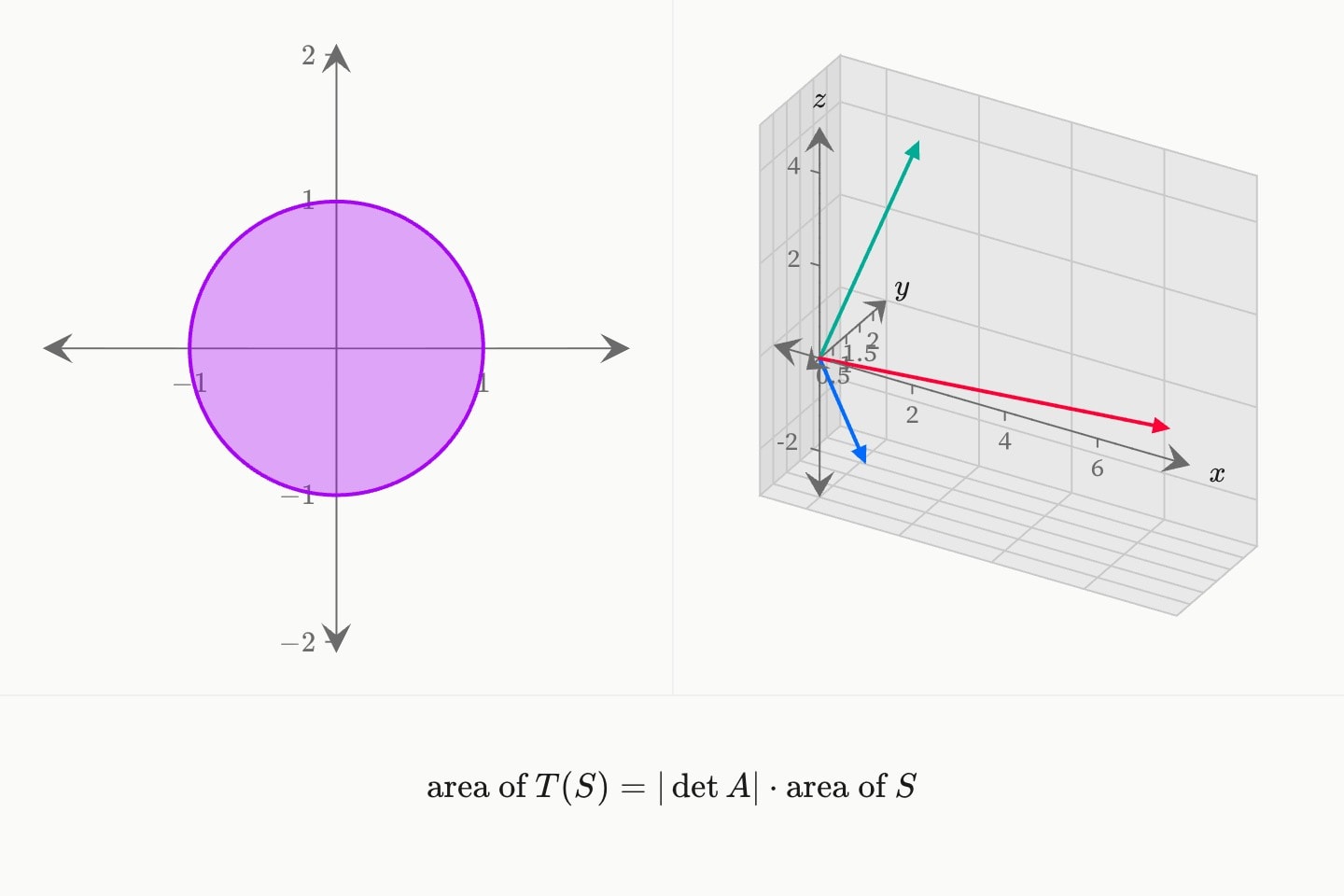
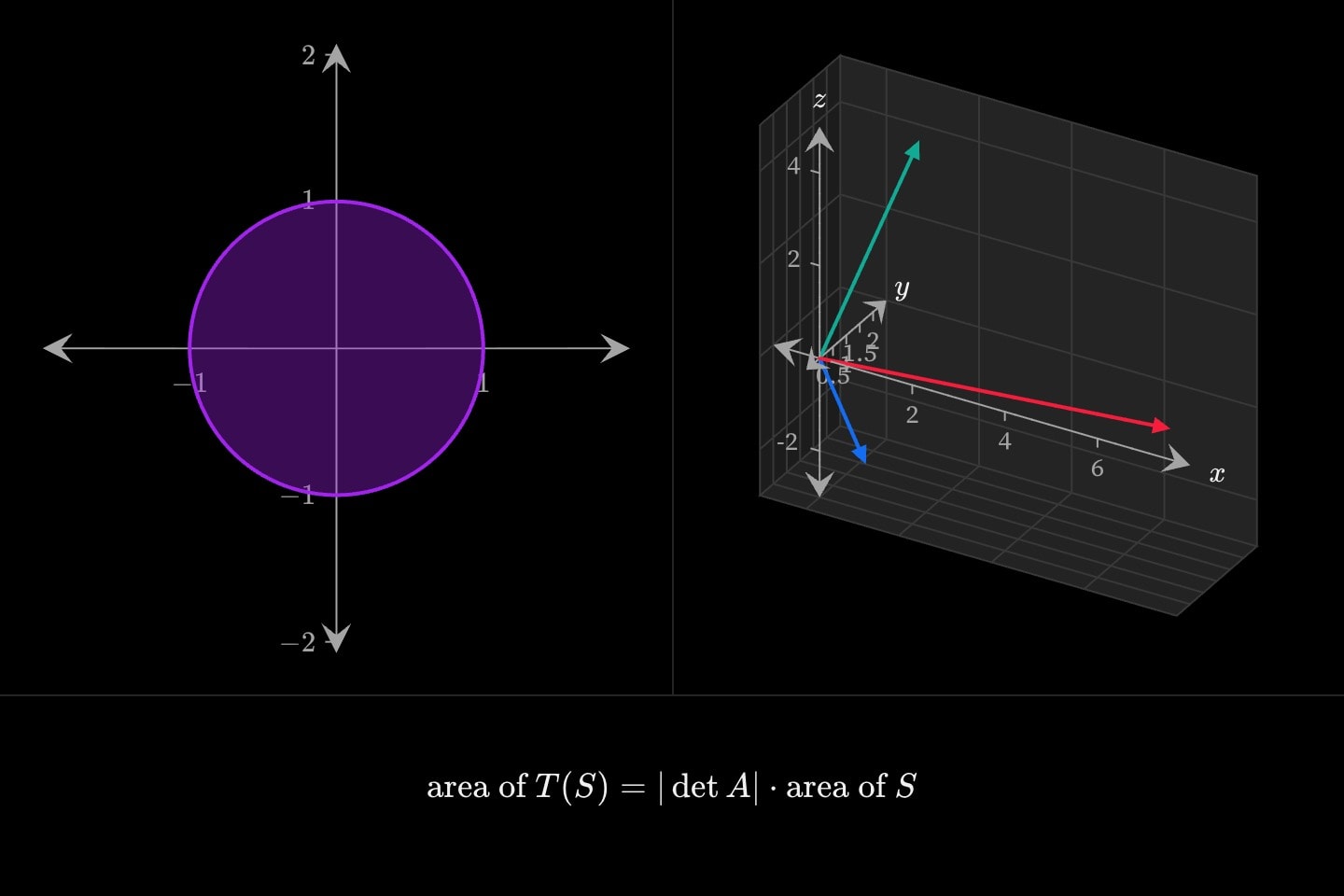
grid{
    graph{
        curve(x: cos(t); y: sin(t); t: [0, 2 * pi]; colour: purple; fill)
    }
    graph:xyz{
        vector(dx: 1; dy: 0; dz: -2; colour: blue)
        vector(dx: 1; dy: 2; dz: 4; colour: teal)
        vector(dx: 7; dy: 1; dz: 0; colour: red)
    }(
        aspect: equal
    )
}

equation{
    \text{area of } T(S) = |\det A| \cdot \text{area of } S
}