arrow
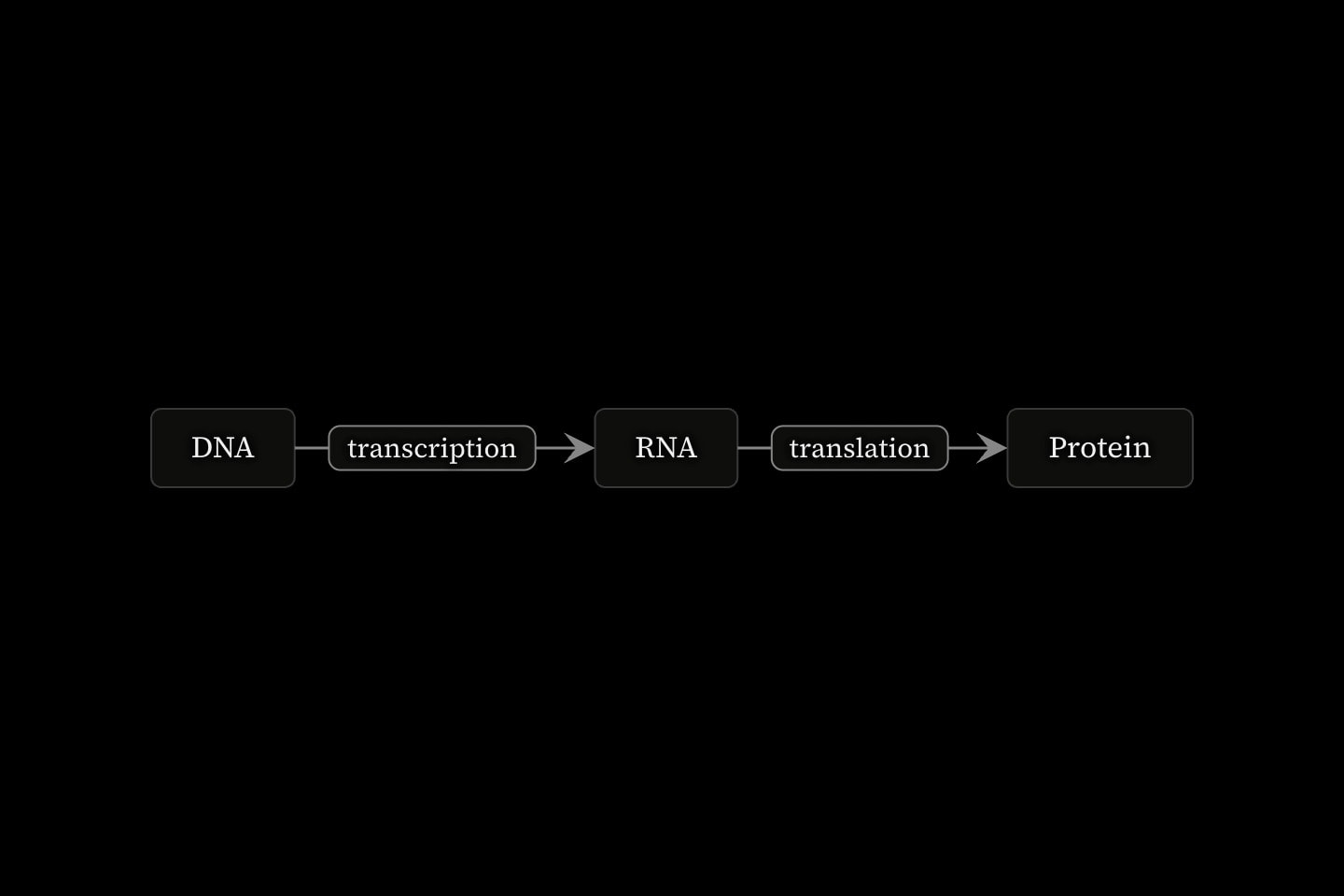
A relation between two boxes in a flowchart, drawn as a line the environment routes.
arrow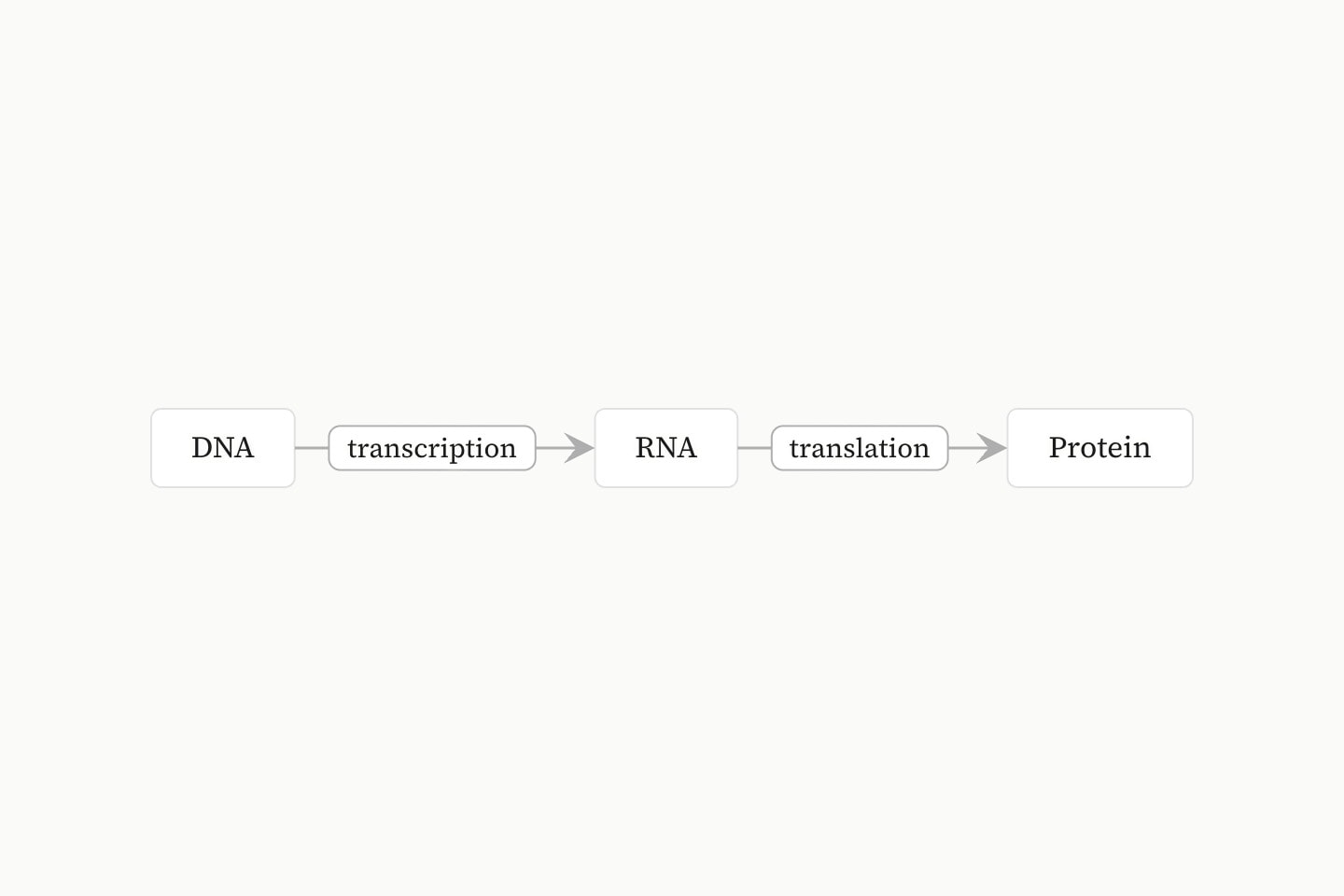
#Attributes
from#id of the box the arrow leaves.Can be written as shorthand:
arrow:valueto#id of the box the arrow enters.headWhich ends carry a head:
end (the default, at to), none for a plain line, as Chen's entity–relationship links are, both, or start (at from). The boxes are ranked from from to to whichever it is.endnonebothstartDefault
endlabelRich inline text in a chip on the arrow's own run near where it leaves, clear of other lines and chips; failing that near where it lands, and failing both just beside its line.
from-labelRich inline text set beside the line where it leaves
from — an entity–relationship cardinality, say: arrow(from: #student; to: #enrols; head: none; from-label: N).to-labelRich inline text set beside the line where it meets
to.colourThe hue of the stroke, its head, its chip's edge and its label; unset, a neutral grey.
colourAlso written:
colordashedA dashed stroke — the conventional weaker or conditional relation.
Default
falsehiddenDeclared but not drawn, and taking no room while hidden. Animatable.
Default
false#Allowed in
#Examples
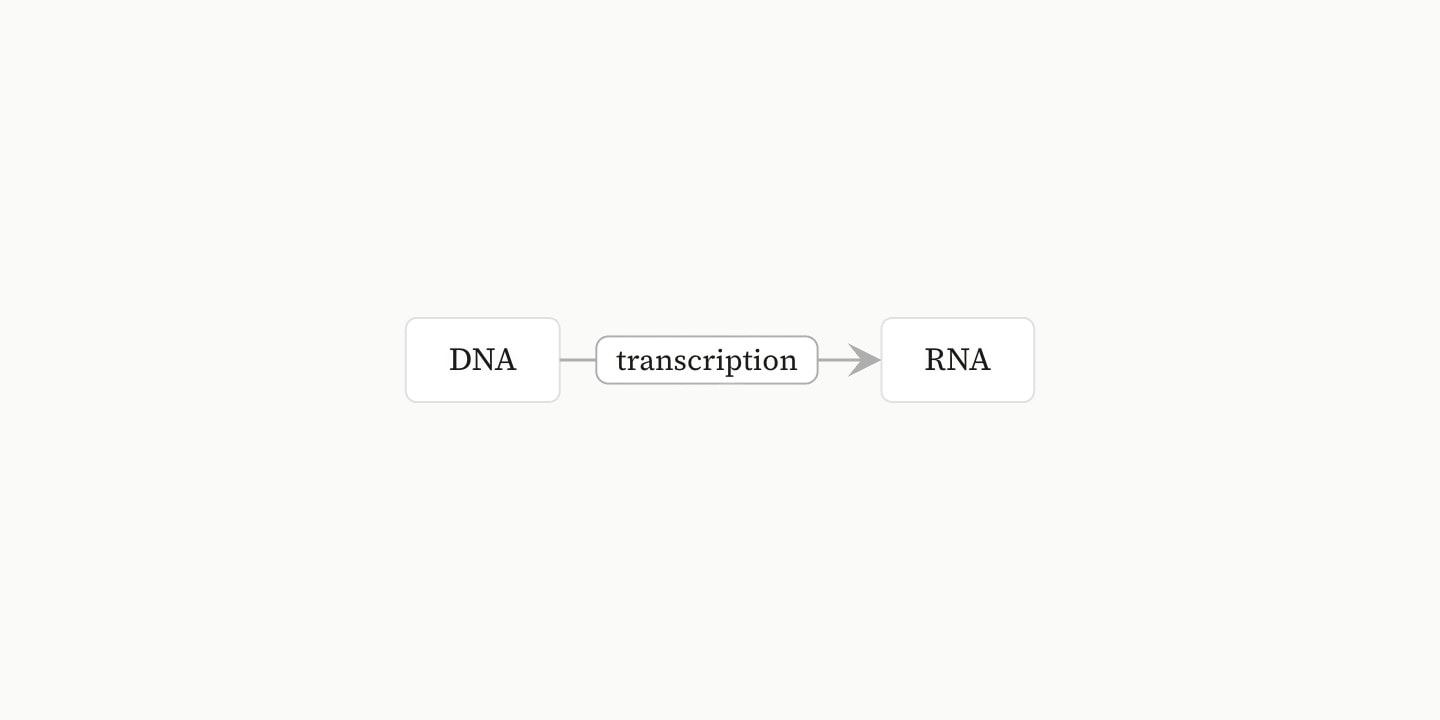
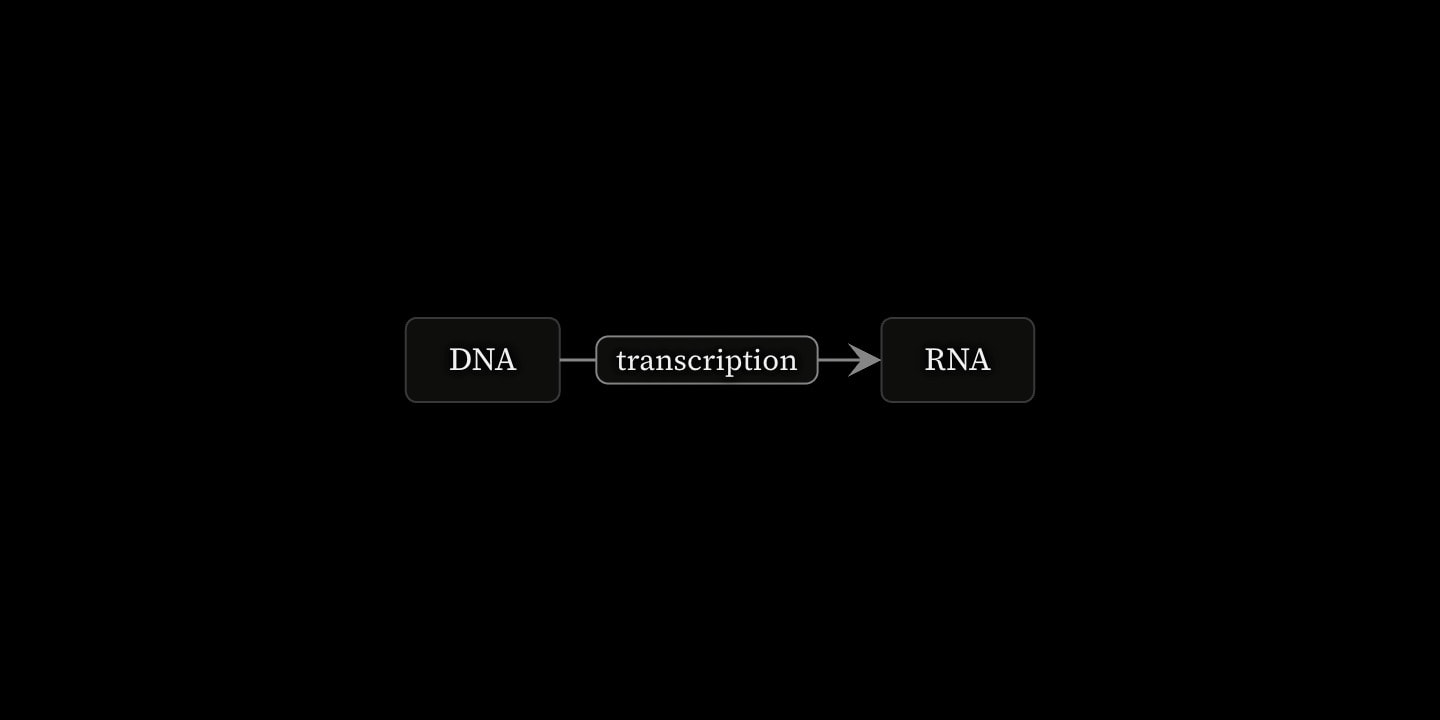
flowchart{
    box#dna{DNA}
    box#rna{RNA}
    arrow(from: #dna; to: #rna; label: transcription)
}(
    direction: right
)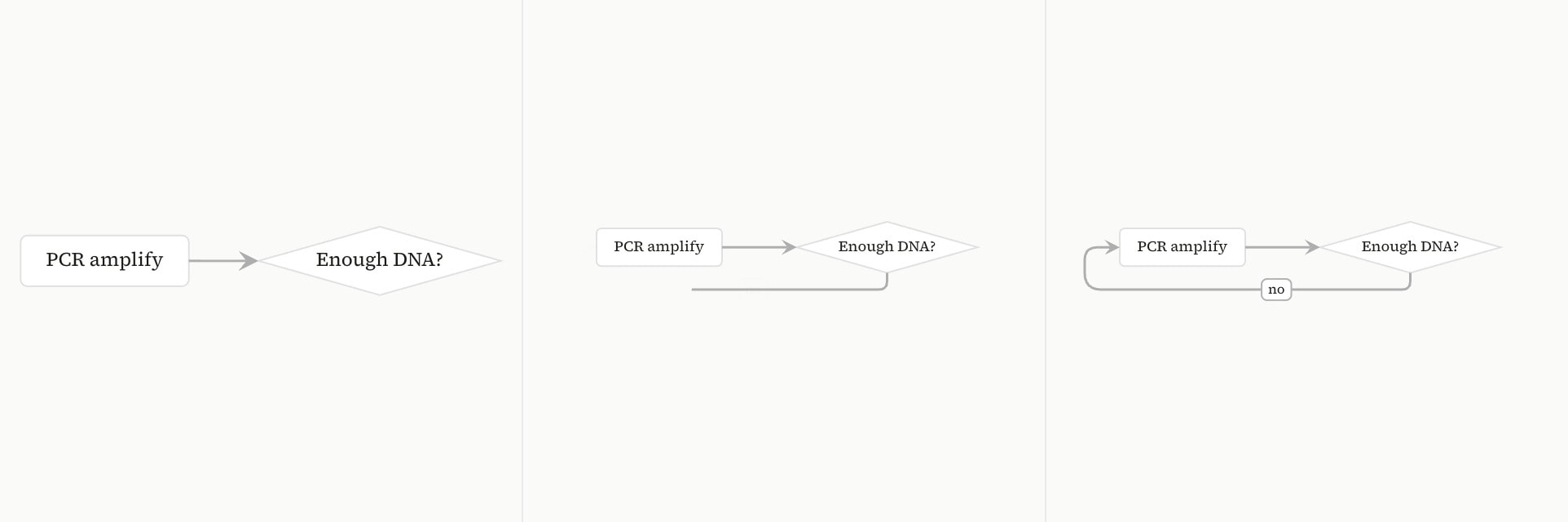
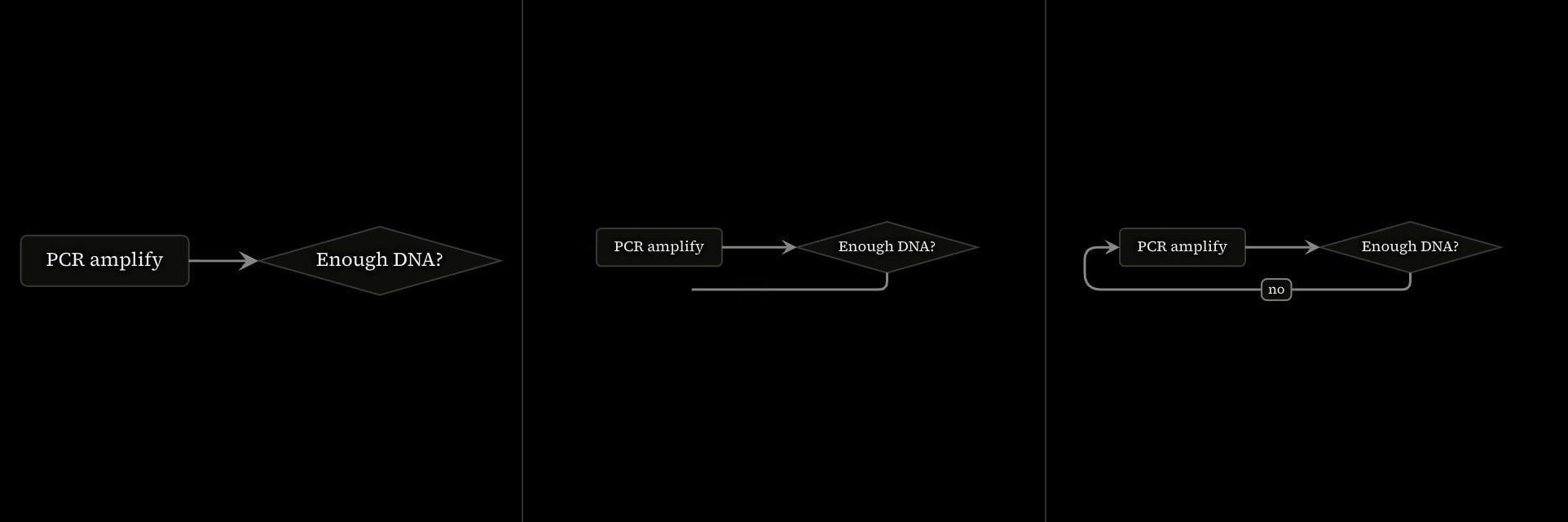
flowchart{
    box#pcr{PCR amplify}
    box#check:decision{Enough DNA?}
    arrow(from: #pcr; to: #check)
    cue.draw{
        arrow(from: #check; to: #pcr; label: no)
    }(
        in: 2
    )
}(
    direction: right
)#Notes
- The endpoints are
#ids of boxes in the same environment; an id no box declares is a compile error:'arrow.to' names '#qc', but no box in this environment declares that id. - A forward arrow leaves the front of its source and lands on the back of its target: straight where the two line up, and turning once, on a track of its own, where they do not.
- An arrow never crosses a box or runs along another arrow.
- An arrow back against the flow, or to its own box, leaves by the side and lands on the target's back.
cue.drawstrokes an arrow in along its length; several arrows and boxes in one draw follow the flow.- A
dashed:arrow fades in undercue.drawinstead of being stroked.