gate
A logic gate, drawn as its schematic symbol turned to the flow.
gateOn this page
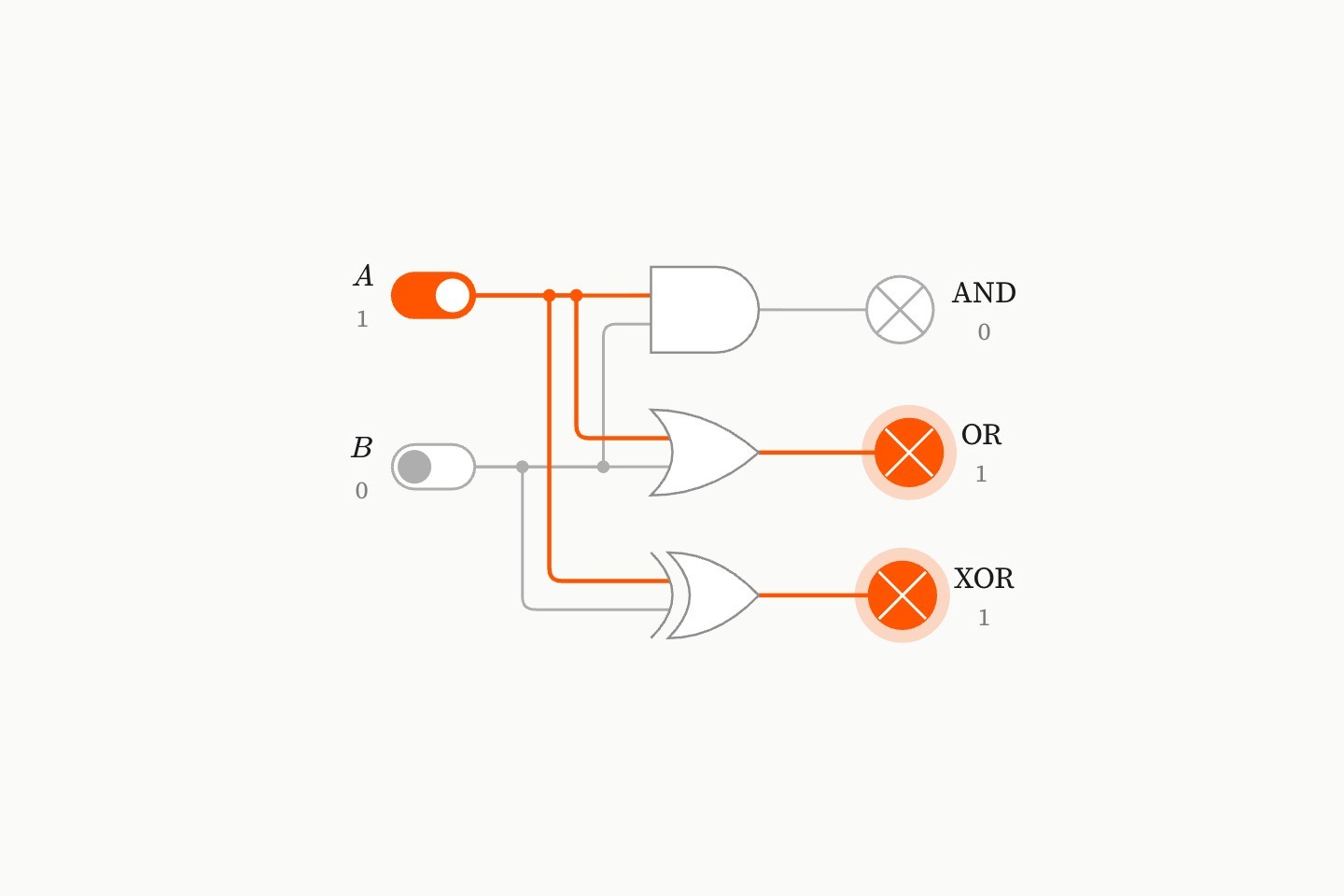
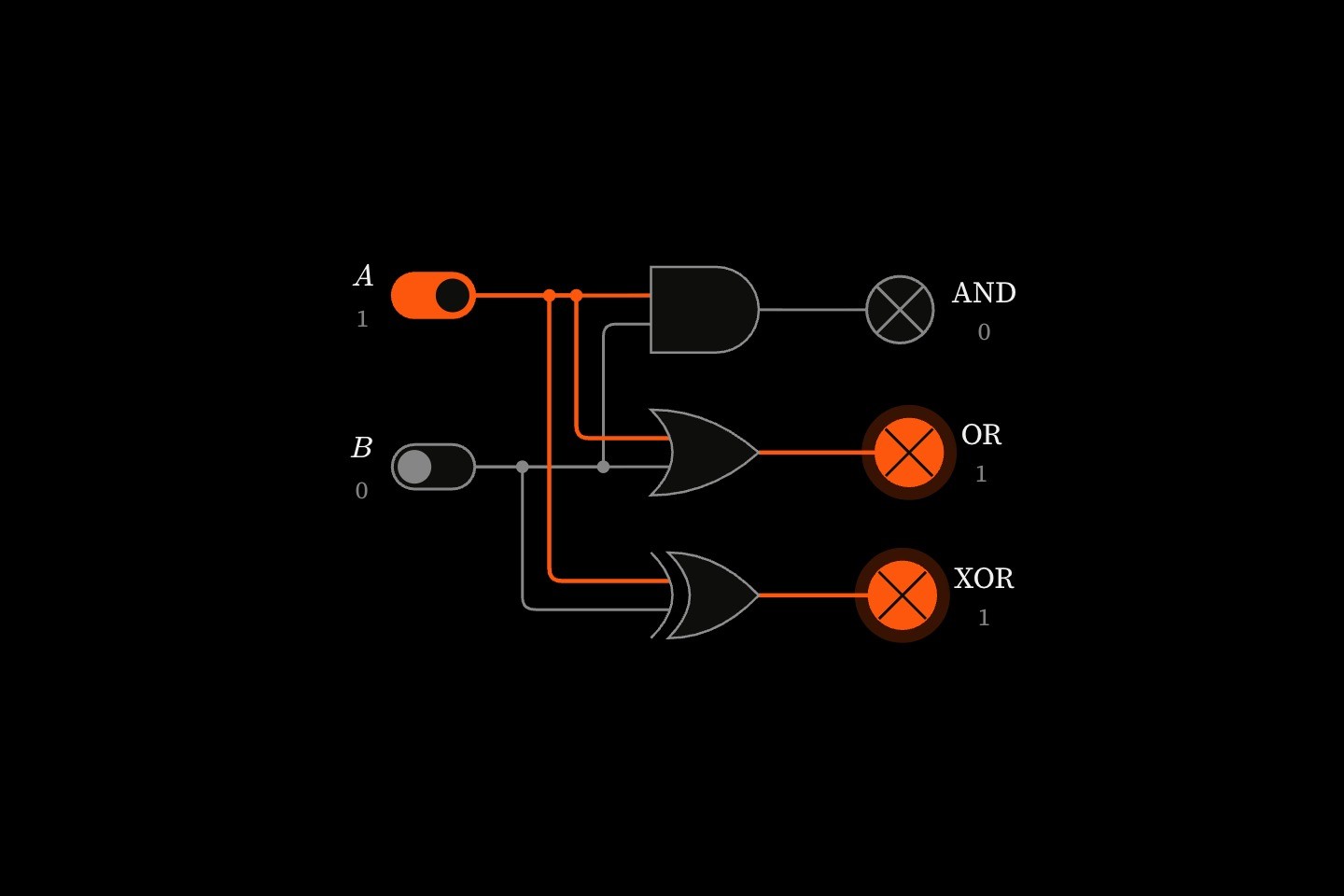
#Attributes
kindWhat the gate computes.
andornotnandnorxorxnorCan be written as shorthand:
gate:valuevalueThe level its output starts at, 0 or 1.
colourA hue that tints the symbol's fill and deepens its stroke, to pick one gate out.
paintAlso written:
colorhiddenDeclares the gate without drawing it or giving it room; it still computes.
Default
false#Derived attributes
Computed while the element renders — read one with #id.name in attribute position or {{#id.name}} in prose, never set.
levelThe level of its output.
#Allowed content
Body { }Words set inside the symbol; usually empty
#Allowed in
#Examples
gate#x1:xor{}gate#n1:nor{}(value: 0)#Notes
and,or,nand,nor,xorandxnortake as many inputs as wires arrive, each on a port of its own on the gate's back, placed where its source stands;nottakes one.- A gate's inputs have no names; a named input is a compile error:
A gate's inputs have no names — write the wire to '#g', and it takes the next free input. - The output leaves the gate's front and fans out to every wire that leaves it.
- A gate answers a change one gate delay, 110 ms, later.
- An AND with a 0 among its inputs is 0 whatever the others are, an OR with a 1 is 1, and anything else touched by an unknown is unknown.
- A gate's inputs have no names; wires land on the next free input.