vertex
A point in a network.
vertexOn this page
#Attributes
groupThe vertex's group, a free word:
staff, students; the implicit attribute, vertex#ada:staff{Ada}. Vertices sharing one are coloured alike under a vertices table's colour: group, kept together round a circle, and set on one side of a bipartite network.Can be written as shorthand:
vertex:valuestageThe stage the vertex stands in on a
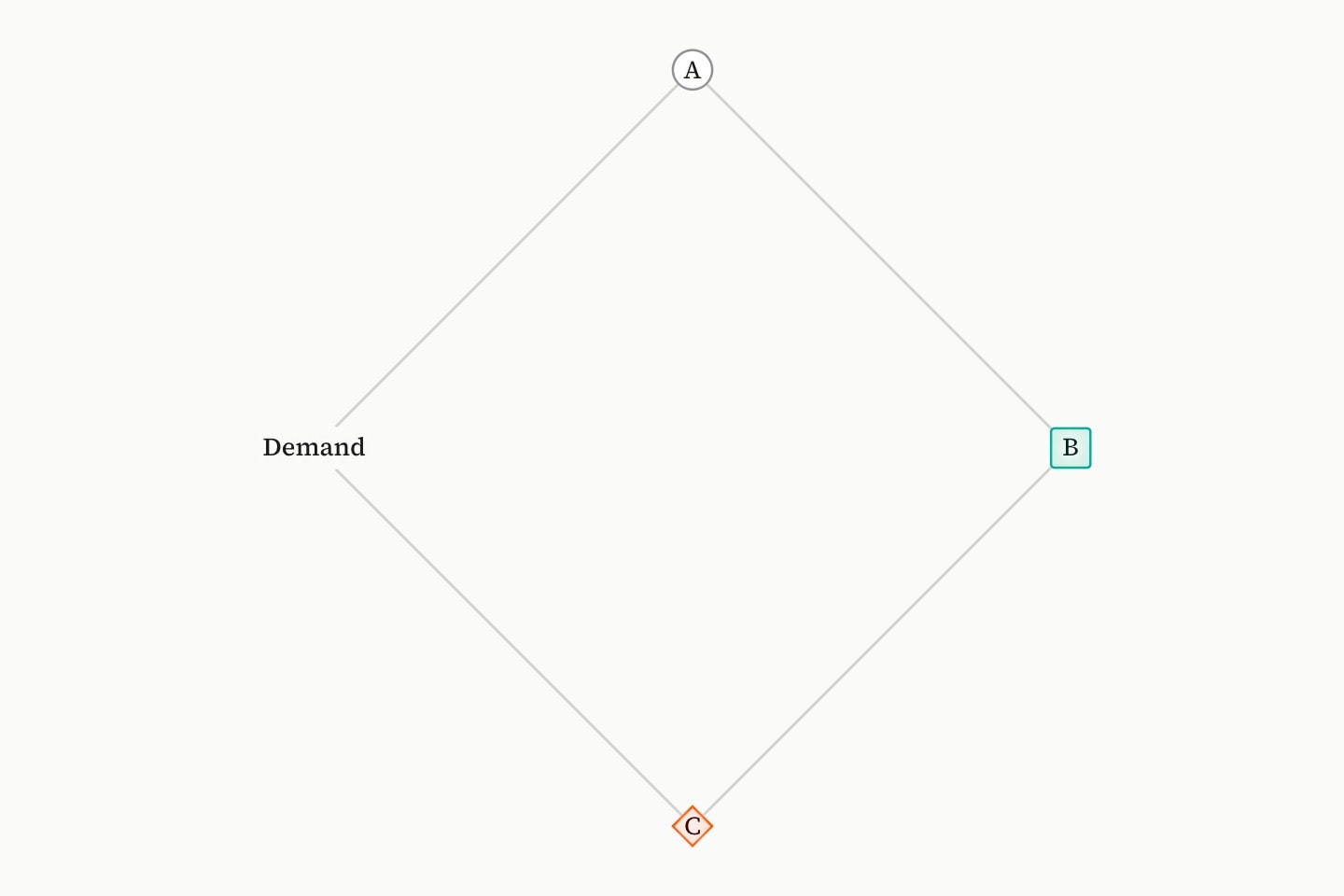
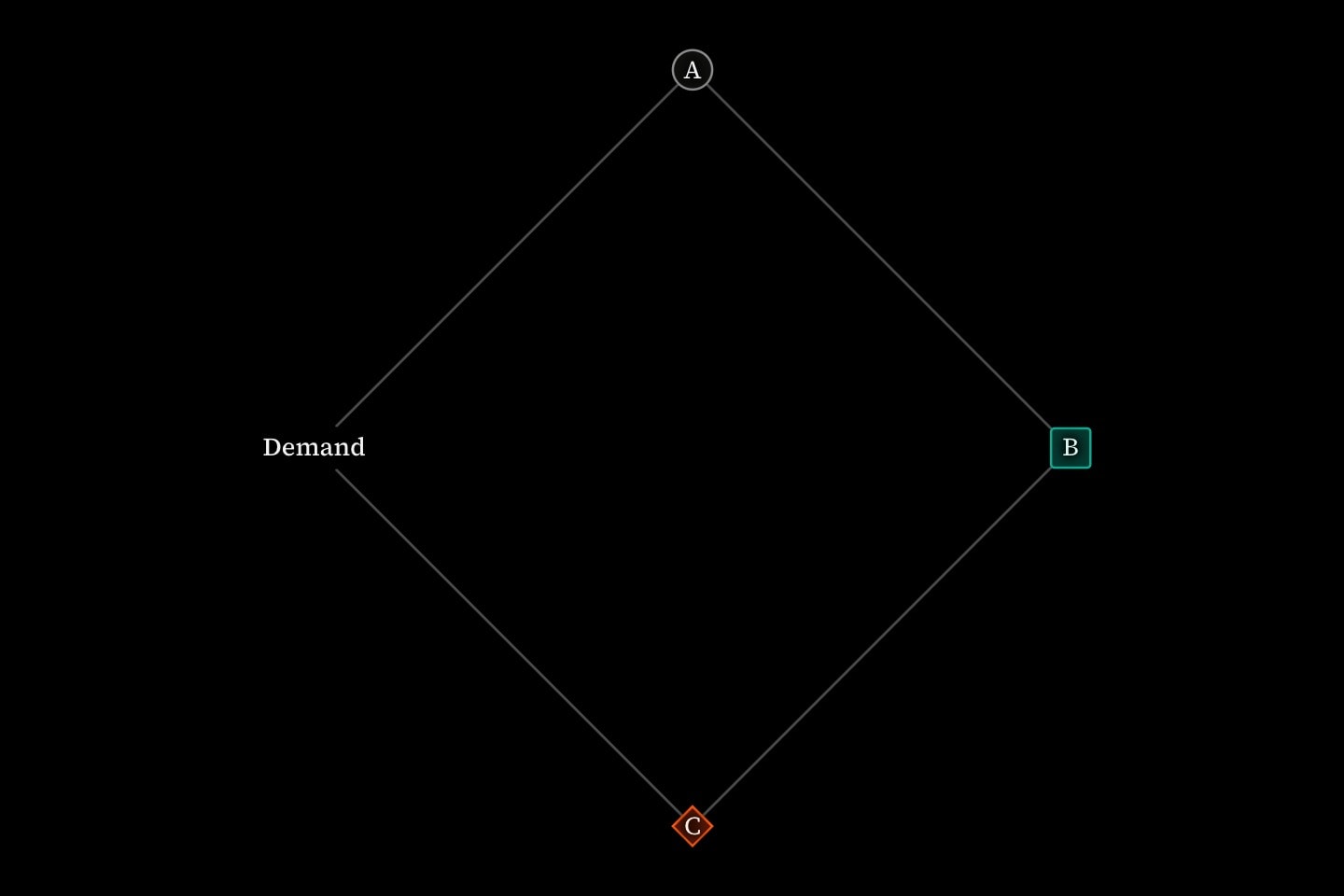
flow network: a number, the stages in numerical order, or a name, the stages in the order the vertices are written — stage: 2024. Left out, the vertex stands after the longest run of flow into it. Read by no other layout.atWhere the vertex sits, as two fractions of the frame from 0 to 1, top-left origin, y down. The force layout arranges the others around it; the other layouts place the rest as if it were in its own slot, which is left empty. Animatable with
!cue.to; the layout is taken from the first value, so a keyframe moves this vertex alone.network-pointshapecircle, square, diamond, or none — the label alone, which edges meet at its edge: the causal-loop convention.circlesquarediamondnonesizeA multiplier on the vertex's radius, applied after whatever size a
vertices table's size: gives it. Animatable.Default
1colourThe vertex's hue, overriding any table's
colour:. Unset and uncoloured by a table, the vertex is an outline on the environment's ground.paintAlso written:
colorhiddenDeclared but not drawn, and its edges with it. The vertex keeps its place and still counts in every measurement. Animatable.
Default
false#Derived attributes
Computed while the element renders — read one with #id.name in attribute position or {{#id.name}} in prose, never set.
degreeHow many edges meet the vertex — in and out together on a directed network. A self-loop counts twice.
in-degreeHow many edges point into the vertex; on an undirected network, the degree.
out-degreeHow many edges leave the vertex; on an undirected network, the degree.
betweennessThe share of shortest paths between other vertices that pass through this one, from 0 to 1 — weighted by edge weight where the network has weights.
#Allowed content
Body { }The vertex's label, rich inline
#Allowed in
#Examples
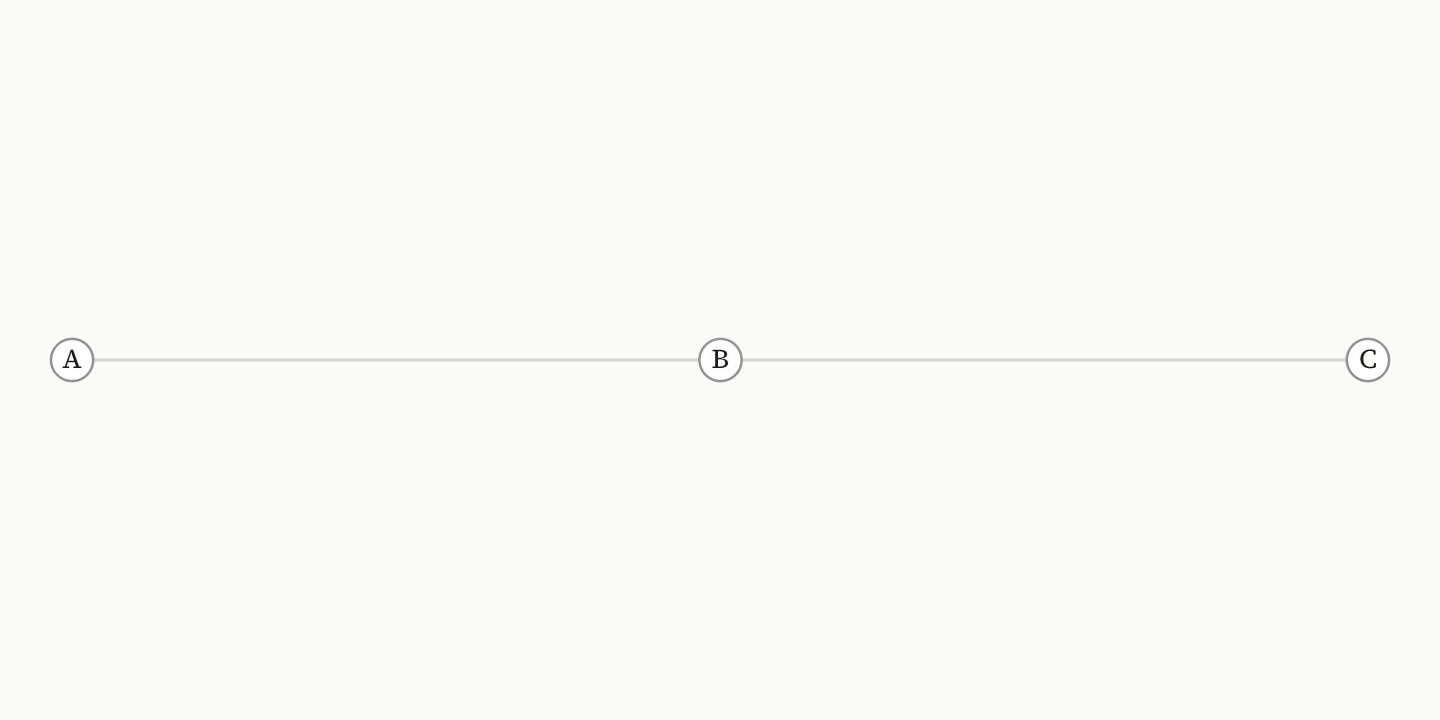
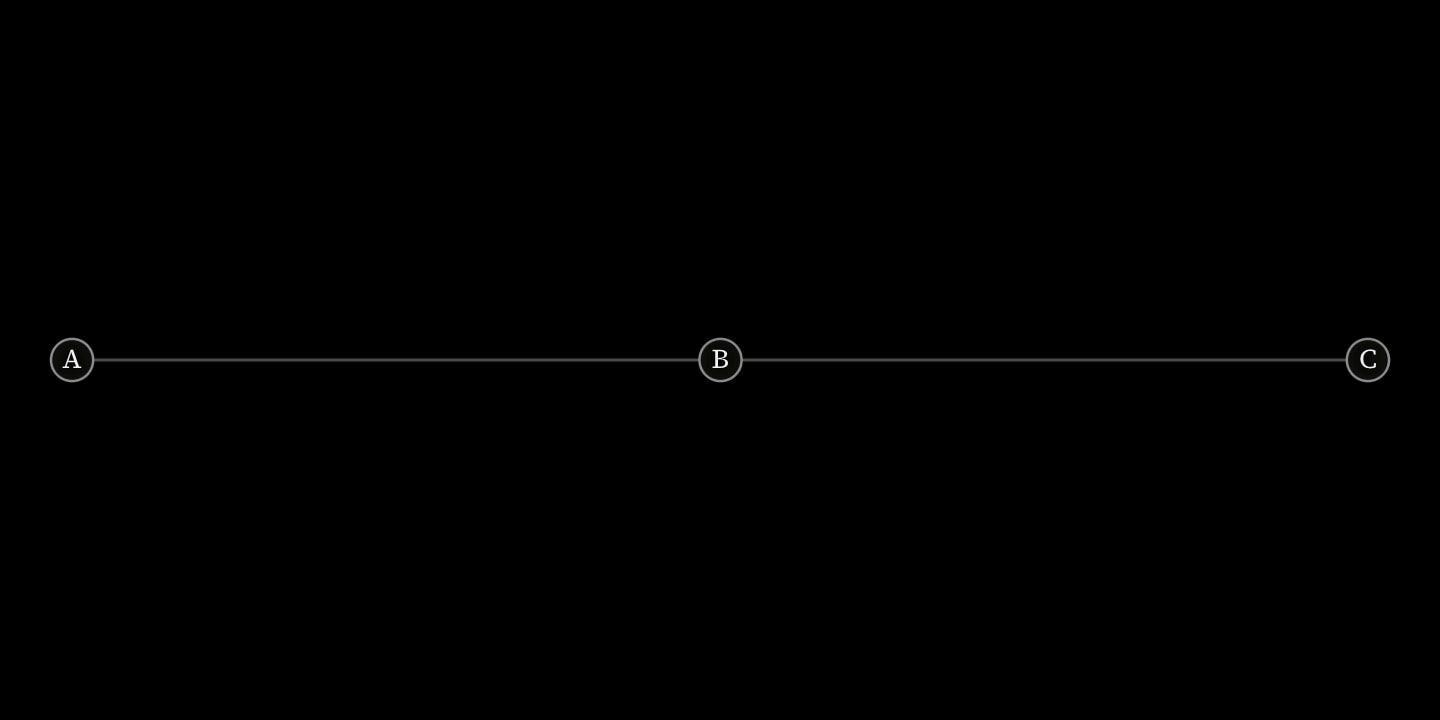
network{
    vertex#a{A}
    vertex#b{B}
    vertex#c{C}
    edge(from: #a; to: #b)
    edge(from: #b; to: #c)
}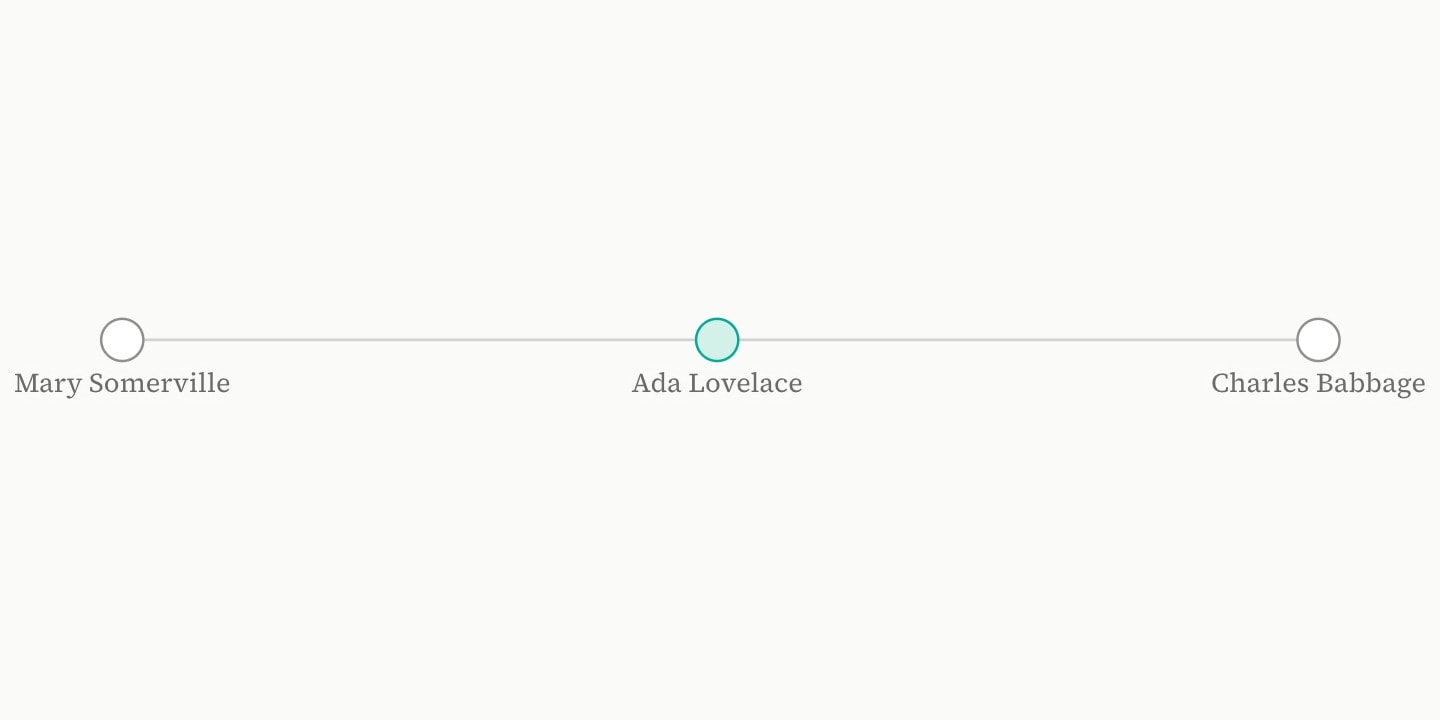
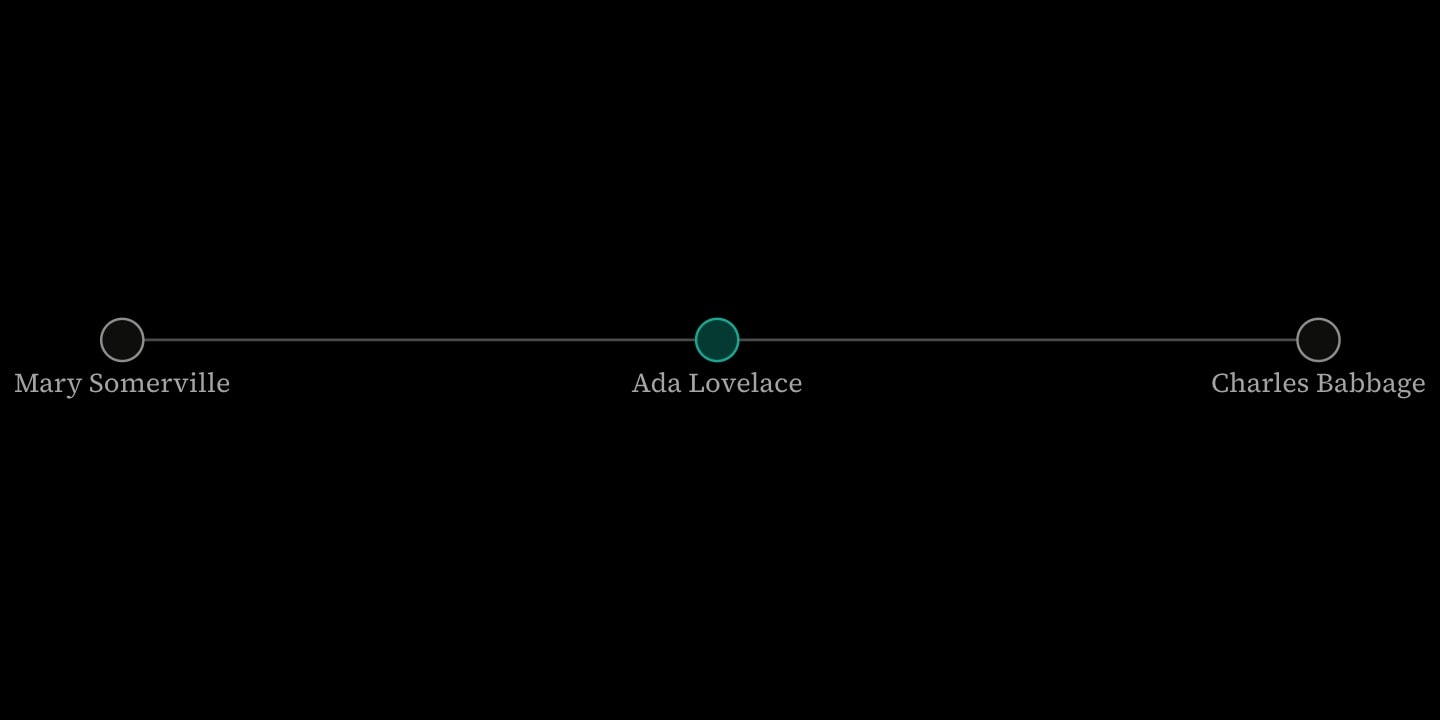
network{
    vertex#ada:staff{Ada Lovelace}(colour: teal)
    vertex#babbage:staff{Charles Babbage}
    vertex#somerville:staff{Mary Somerville}
    edge(from: #ada; to: #babbage)
    edge(from: #ada; to: #somerville)
}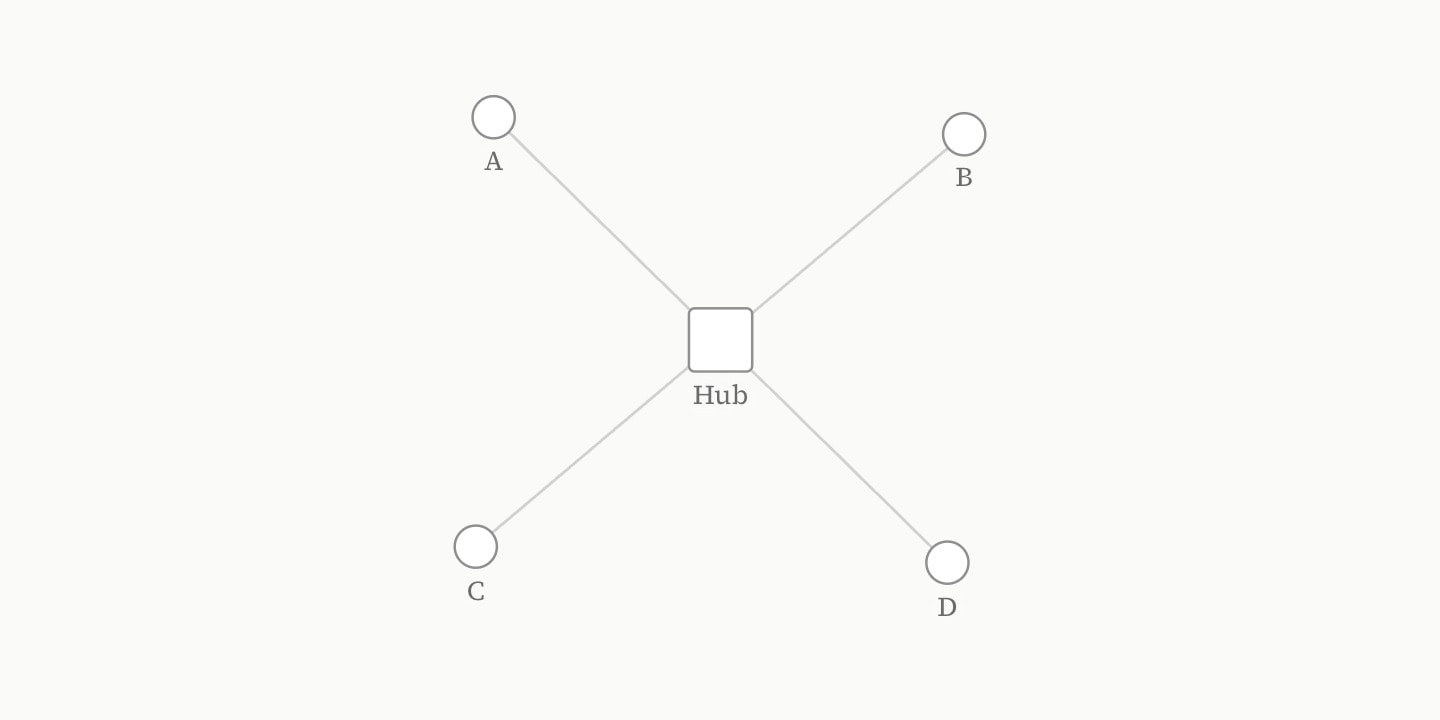
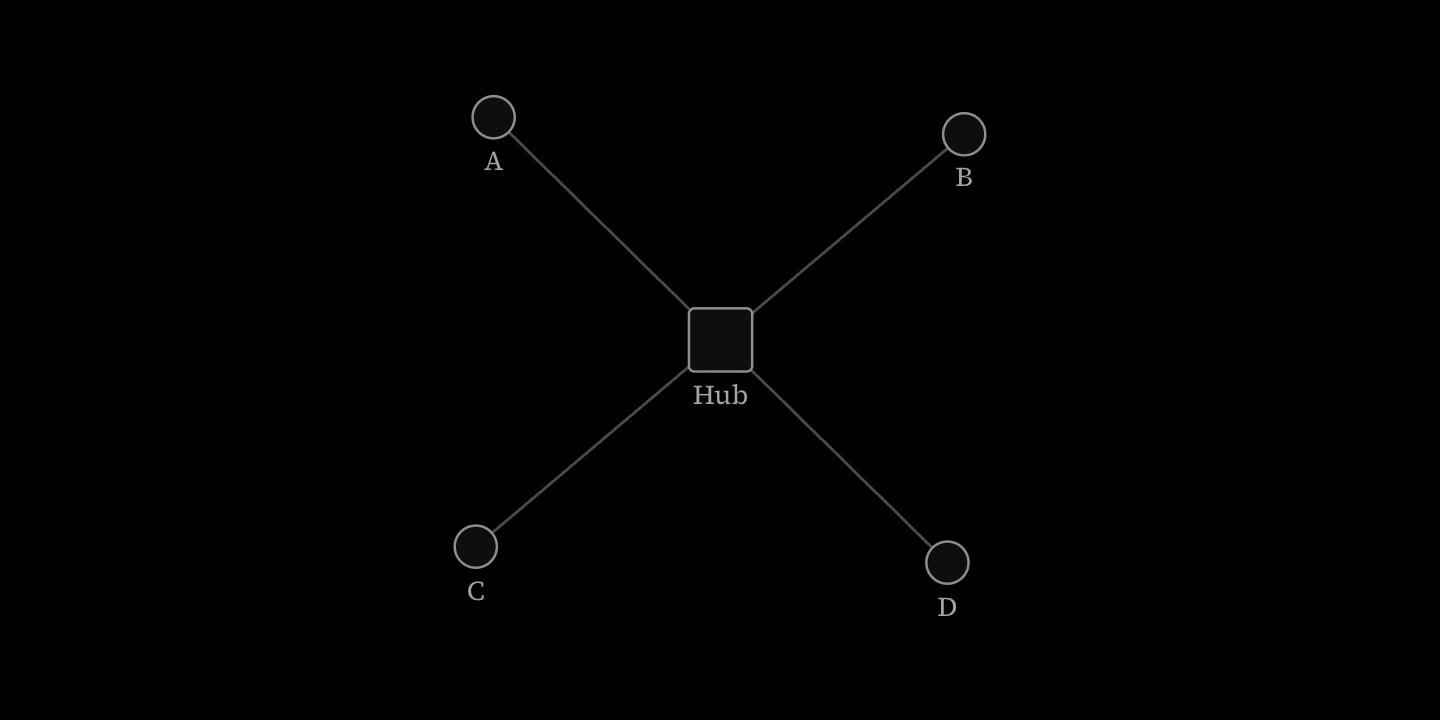
network{
    vertex#hub{Hub}(at: 0.5, 0.5; shape: square; size: 1.5)
    vertex#a{A}
    vertex#b{B}
    vertex#c{C}
    vertex#d{D}
    edge(from: #hub; to: #a)
    edge(from: #hub; to: #b)
    edge(from: #hub; to: #c)
    edge(from: #hub; to: #d)
}#Notes
- The body is its label, rich inline; with no body it is a dot.
- Labels sit inside the vertices when every labelled vertex can hold its own, and otherwise all beside, each on a side its edges leave clear; a label with no room shows on hover.