vertices
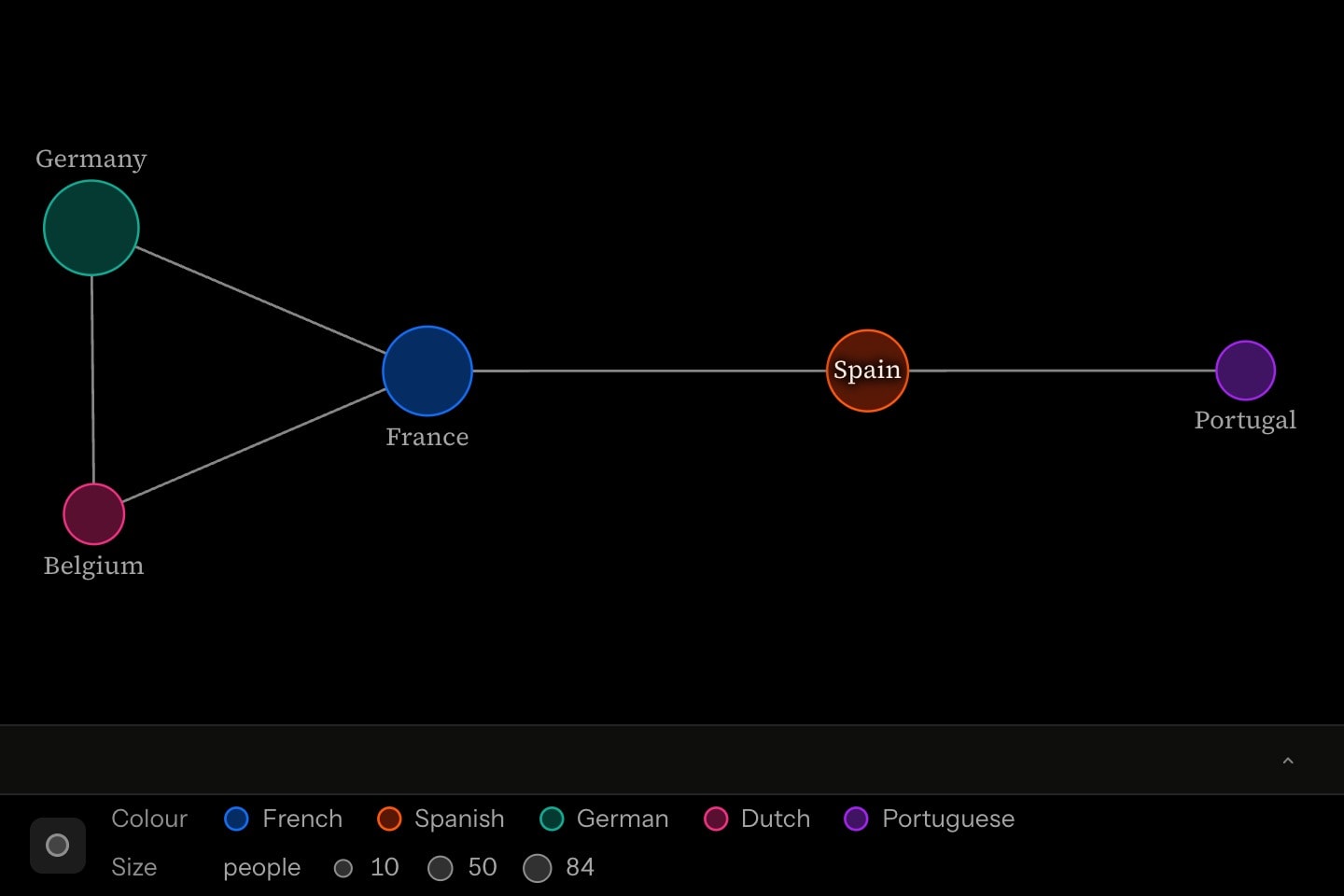
A vertex table from , one vertex per row: vertices(names: #cities.city; sizes: #cities.population; groups: #cities.region). names: is the key an edge list's cells and an inline vertex's label are matched against; the other columns carry what the network's own measurements cannot — the data's own numbers and categories. Column attributes are plural. A listed vertex with no edges is drawn on its own. The table also carries the vertices' encodings — colour-by: and size-by: — which live on the tables, never on the environment. A table with no names: lists no rows: its rules cover every vertex no named table lists, inline vertices included — vertices(size-by: degree).
vertices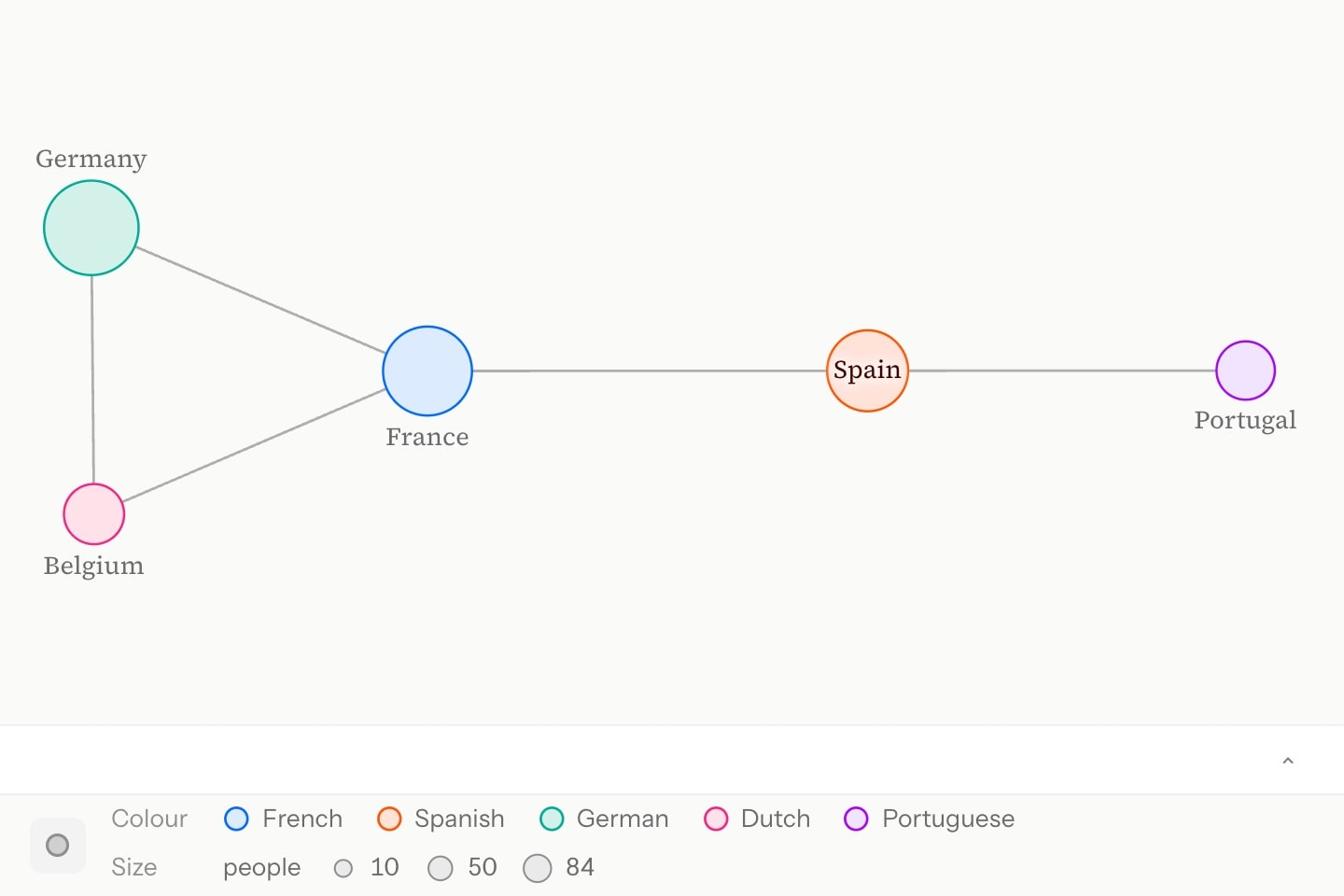
#Attributes
namesThe column naming each row's vertex. A name matching an inline vertex's label or id — case and spacing aside — lends that vertex the row; any other name makes a vertex.
Can be written as shorthand:
vertices:valuelabelsWhat each vertex is labelled, where it differs from its name:
names: #cities.code with labels: #cities.city.groupsEach vertex's group — what
colour-by: group, the circle's ordering and a bipartite split read. Under colour-by: group each group is dealt a hue and named in the footer's key. An inline vertex's own group: wins.colour-byHow the table's rows are coloured:
group deals each of its groups: a hue, named in the key; component colours by which connected piece of the network a vertex is in; community by the densely knit clusters modularity finds within a piece (the Louvain method). A vertex's own colour: overrides it.nonegroupcomponentcommunityAlso written:
color-byDefault
nonehuesPins the groups whose hue carries meaning:
hues: Labour = red, Green = green — each group as the data spells it (case and spacing aside), =, then its colour. The rest are dealt from the palette, skipping every pinned hue, so a dealt group never wears a colour a pinned one was given to mean.network-hueshue-labelsRenames groups in the footer's key, and only there:
hue-labels: neutral = Neutral — each group as the data spells it, =, then the name the key gives it.network-hue-labelssizesA numeric column: each vertex's area in proportion to its reading, measured against the largest in the column. It replaces
size-by: for the vertices the table lists.size-byVertex area in proportion to a measurement of the network:
degree, in-degree, out-degree, betweenness, or weight — the summed weight of a vertex's edges. in-degree and out-degree need a directed network. A vertex's own size: multiplies it.nonedegreein-degreeout-degreebetweennessweightDefault
nonehiddenDeclared but not drawn, with the vertices only this table names and their edges. They still count in every measurement. Animatable.
Default
false#Allowed in
#Examples
vertices(names: #cities.city; sizes: #cities.population; groups: #cities.region)vertices(names: #species.code; labels: #species.name; groups: #species.diet; colour-by: group)vertices(size-by: betweenness; colour-by: community)