cue.slider
A slider the scene drives, plus the two attributes a cue takes: at:, the anchor it starts on, and duration:, how long it takes to run its range end to end. A choropleth moving through its years is cue.slider:t(over: #pop.year; at: 2); the same parameter dragged by hand instead is slider:t(over: #pop.year). It is a cue rather than a play: flag because everything that follows from being one is wanted: the anchor is the ordinary one, the host's transport finds the sweep by walking anchors as it finds every other piece of choreography, and the play, pause and replay the reader gets are the step's. duration: is the time to cross the whole range, so a default: part way along it finishes in proportionally less. The reader still gets the track, and dragging it displaces the sweep rather than stopping it: playing on carries the parameter from wherever they let go, at the rate the author set. What moves is the sweep's own elapsed time and never the scene clock — moving that would drag every other cue in the scene along with it — and their displacement is handed back when they leave the step or replay it.
cue.slider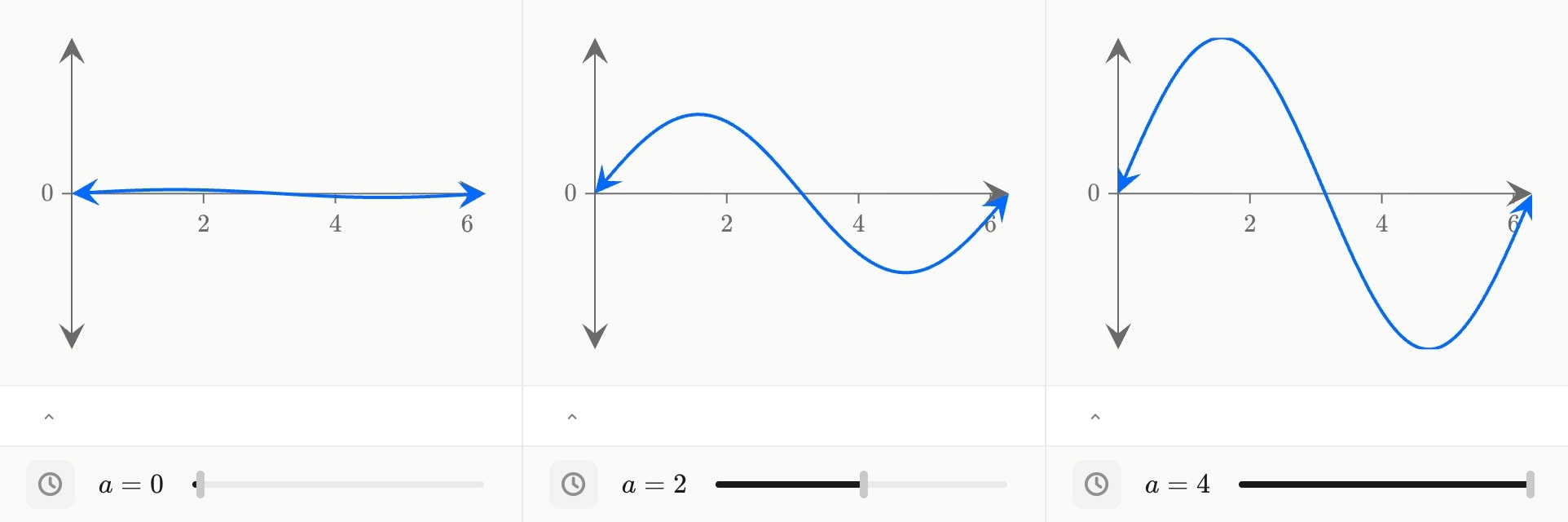
#Attributes
parameterslider:a, and the whole scene's a from then on. One letter is the ordinary case, and the only one an expression can read: curve: a*x^2 reaches it by that letter. A word (selector:country) is for a parameter that never appears in a formula, and cannot be read in maths — to the expression parser country is a product of seven letters.parameter-namevarCan be written as shorthand: cue.slider:valuenamelabeloverover: #pop.year. Its cells are the stops, their span is the range, and what they are decides the format — so range: is not consulted where this is given. A column of NAMES gives a parameter whose values are those names. This is the shape long-format data arrives in, and the shape a mark's slice: reads: the mark names the column, not the parameter, and the two meet at the column.columnformatnumbers, dates, months, weekdays, hours, weeks or names. Every one but the last places a value on its own number line — position 1…12 for a month, a fractional year for a date — so the range stays a pair of numbers and only the reading changes. names has no number line: the values are the data's own words. auto takes the kind from the column over: names, and is numeric where no column was named.autonumbersdatesmonthsweekdayshoursweeksnamesvaluesautorangeover: or options: gives the stops: those decide.[-10, 10]stepover:, the closest the data's own values come to each other, which is the spacing that can reach every row.defaultover:, the first value in the column. Where the stops are names this is an INDEX among them, since a name has no number line to sit on; writing the wanted one first in options: is the usual way to say which opens.starthiddenfalselockeditable: graph.lockedfalsediscretediscrete, it snaps to the nearest — the data's own values, or the step ladder — and the marks jump from one slice to the next, for a quantity that is not a continuous function of the axis.steppedfalseat2), a time (1.5s), or the compound form (3 + 1.5s), read exactly as every other cue anchor is.0duration8s, 1500ms.8seasinglinear by default and not smooth: a parameter's range is a scale the reader reads values off, and easing in and out of it would make the same span of screen mean different amounts of the quantity at different moments.linearsmoothlinear#Derived attributes
Computed while the element renders — read one with #id.name in attribute position or {{#id.name}} in prose, never set.
value#Allowed in
#Examples
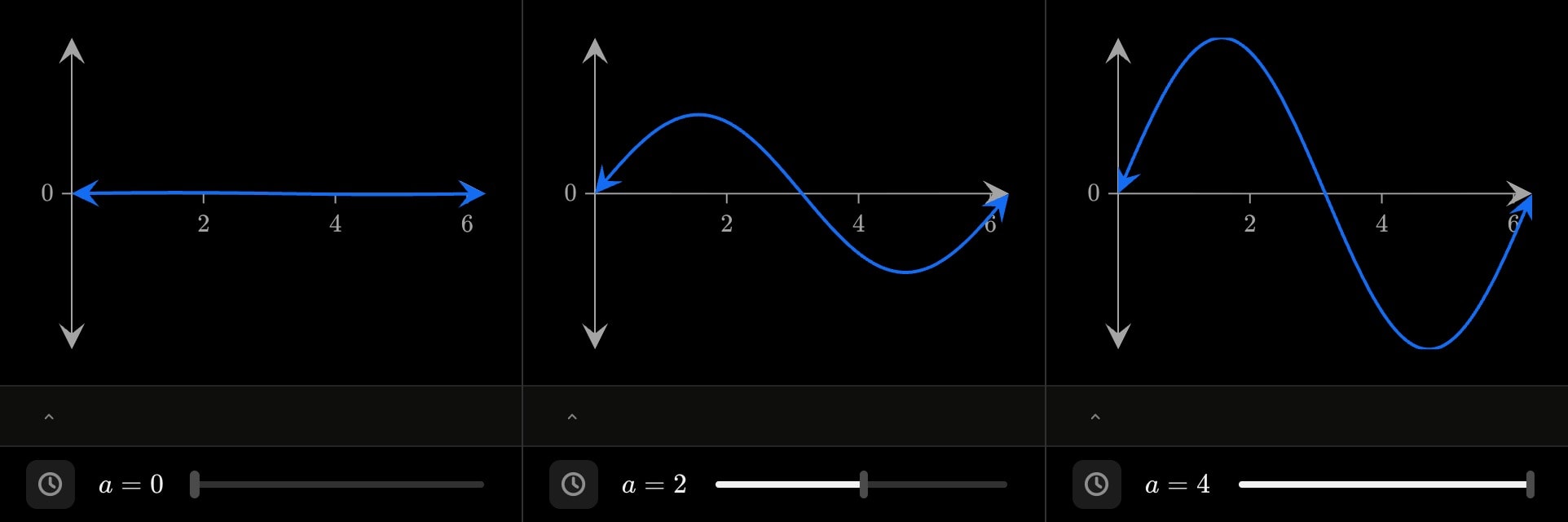
cue.slider#years:t(over: #rates.year; name: Year; at: 1; duration: 12s)cue.slider:a(range: [0, 4]; at: 2; duration: 3s)