solid
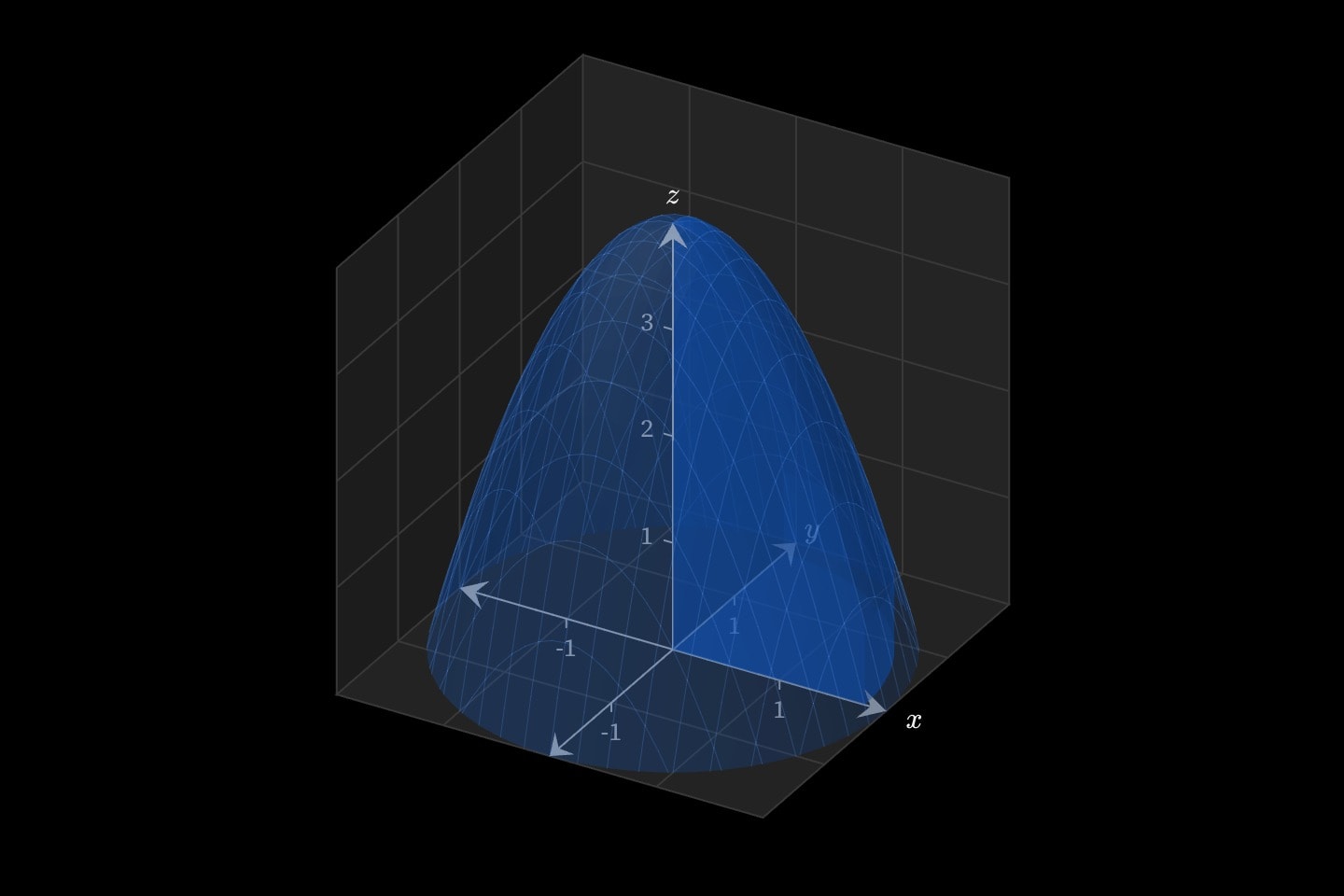
The solid between a surface and a floor over a region: its top is the surface over the region, its walls stand on the region's edge, and its floor is the region itself. The region is written as the bounds of the iterated integral it is: x: [0, 2]; y: [0, 1 - x], the other order y: [0, 1]; x: [0, y], or polar theta: [0, 2pi]; r: [0, 2]. Space only.
solid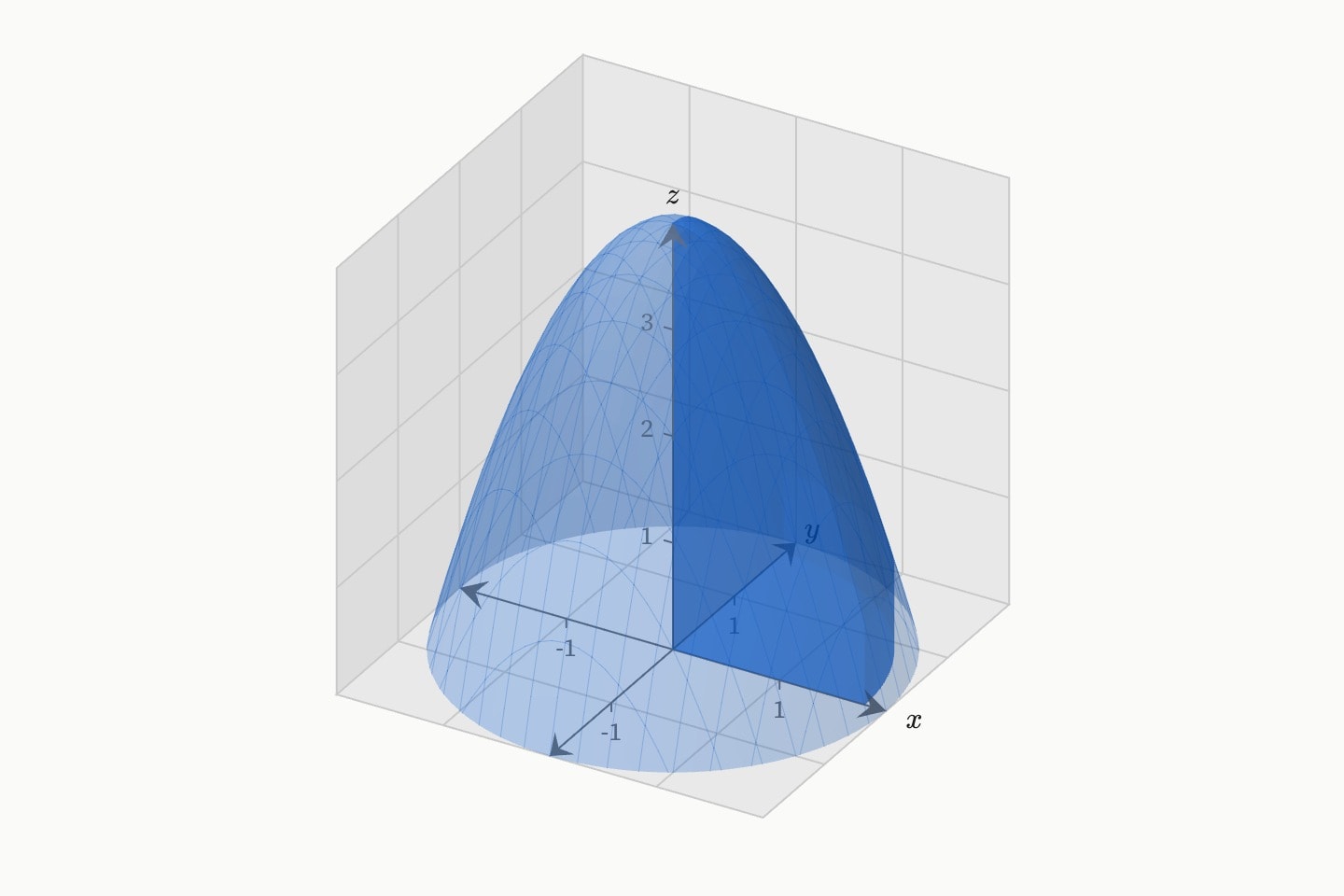
#Attributes
ofThe surface it stands under: z = f(x, y) written out, or
#id naming a surface in the same graph.surface-ofAlso written:
underCan be written as shorthand: solid:valueaboveThe floor: a second surface, or a height. z = 0 when not given.
surface-ofAlso written:
over, floorxThe bounds of x, e.g.
[0, 2], or [0, y] when x is the inner variable.region-boundyThe bounds of y, e.g.
[0, 1 - x] — the inner bound may read the outer variable.region-boundthetaIn the polar form, the outer bound: the angles the region turns through, e.g.
[0, 2pi].region-boundrIn the polar form, the inner bound: the radii at each angle, e.g.
[0, 2 cos(theta)].region-boundcolourIts colour — blue when not given. Faces are shaded in steps of the hue by how squarely they face a light fixed to the camera.
bluelight-bluedark-blueredlight-reddark-redorangelight-orangedark-orangeyellowlight-yellowdark-yellowteallight-tealdark-tealgreenlight-greendark-greenpinklight-pinkdark-pinkpurplelight-purpledark-purplegreylight-greydark-greyneutralhex(…)rgb(…)colorDefault
blueopacityHow solid it is, 0 to 1.
Default
0.4labelWords drawn beside it, over everything.
hiddenDeclared but not drawn — animatable, so
hidden: true !cue.to{false}(at: 2) is its reveal.Default
falselockA reader may not edit it.
Also written:
lockedDefault
falselayerAccepted for parity with the flat marks; in space the paint order is depth.
#Examples
graph:xyz{
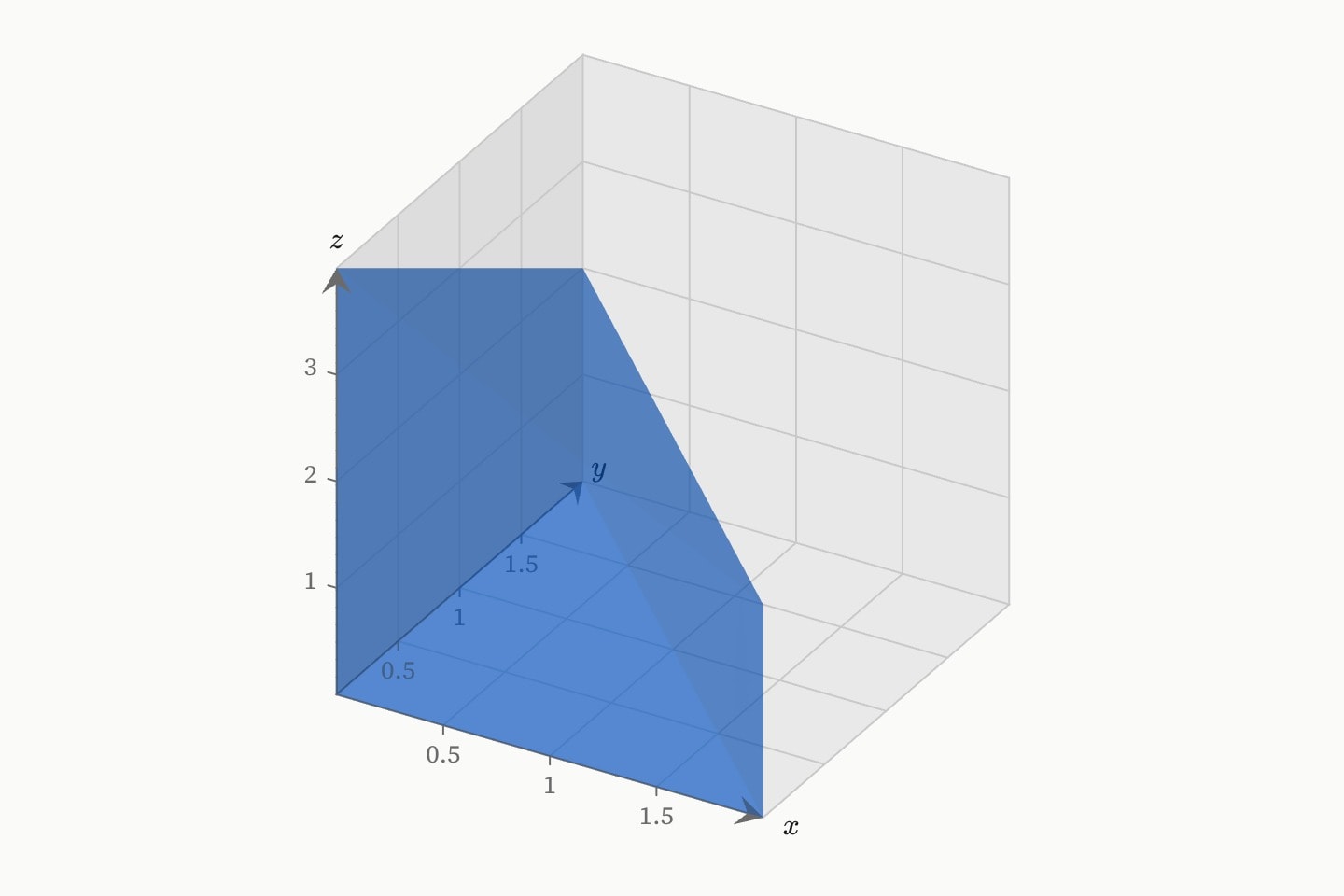
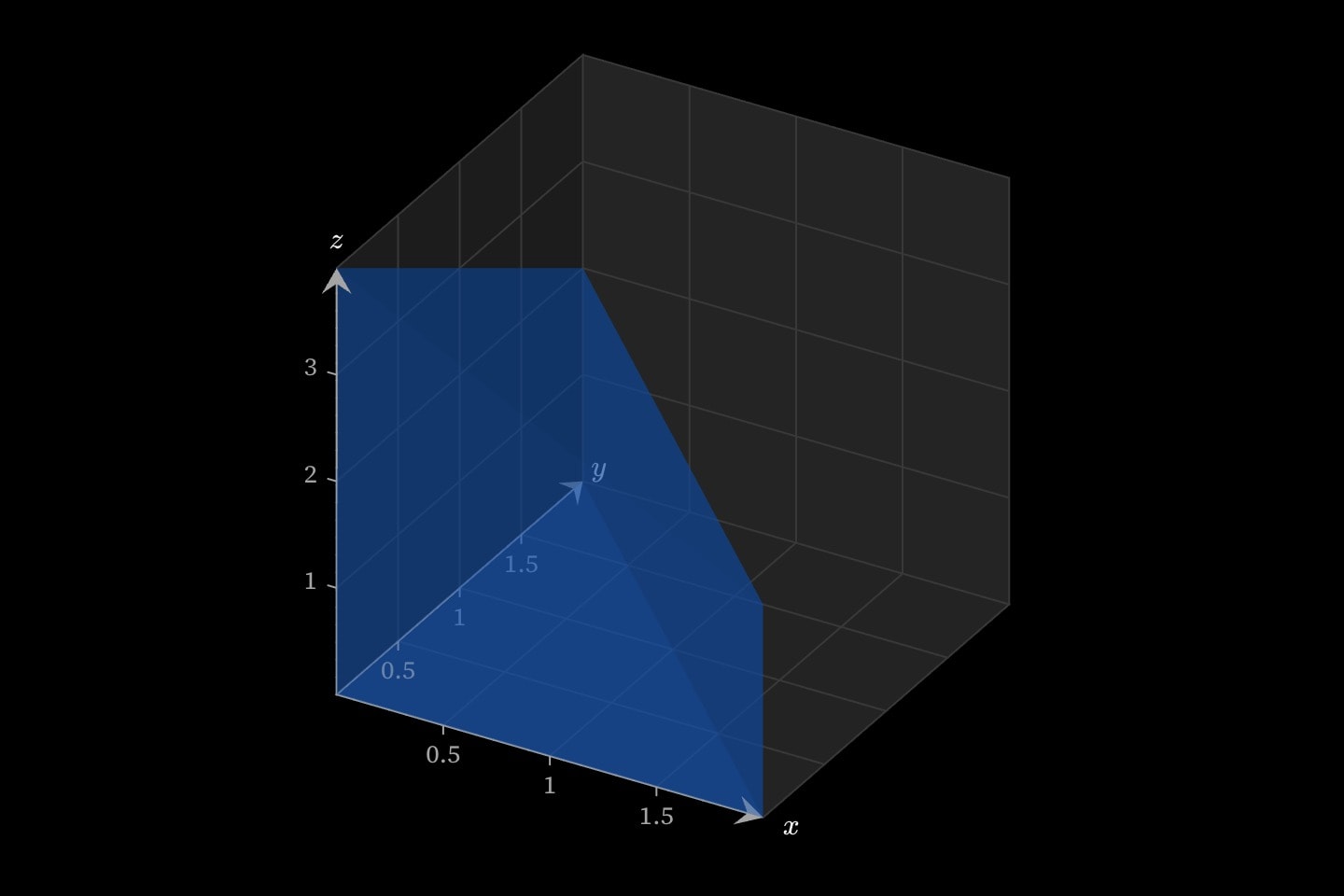
    solid(of: 4 - x - y; x: [0, 2]; y: [0, 2 - x])
}(
    x domain: [0, 2]
    y domain: [0, 2]
    z domain: [0, 4]
)
graph:xyz{
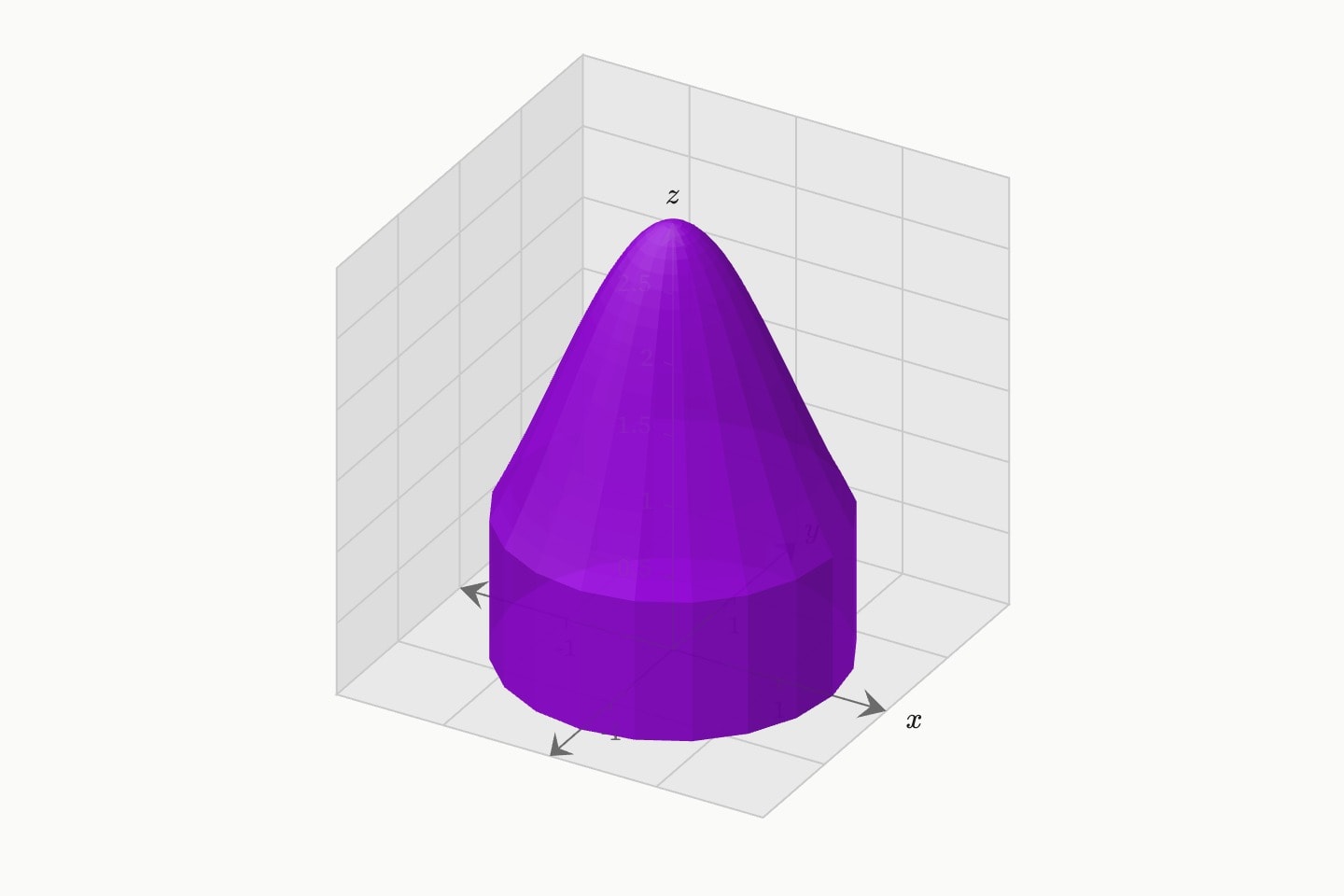
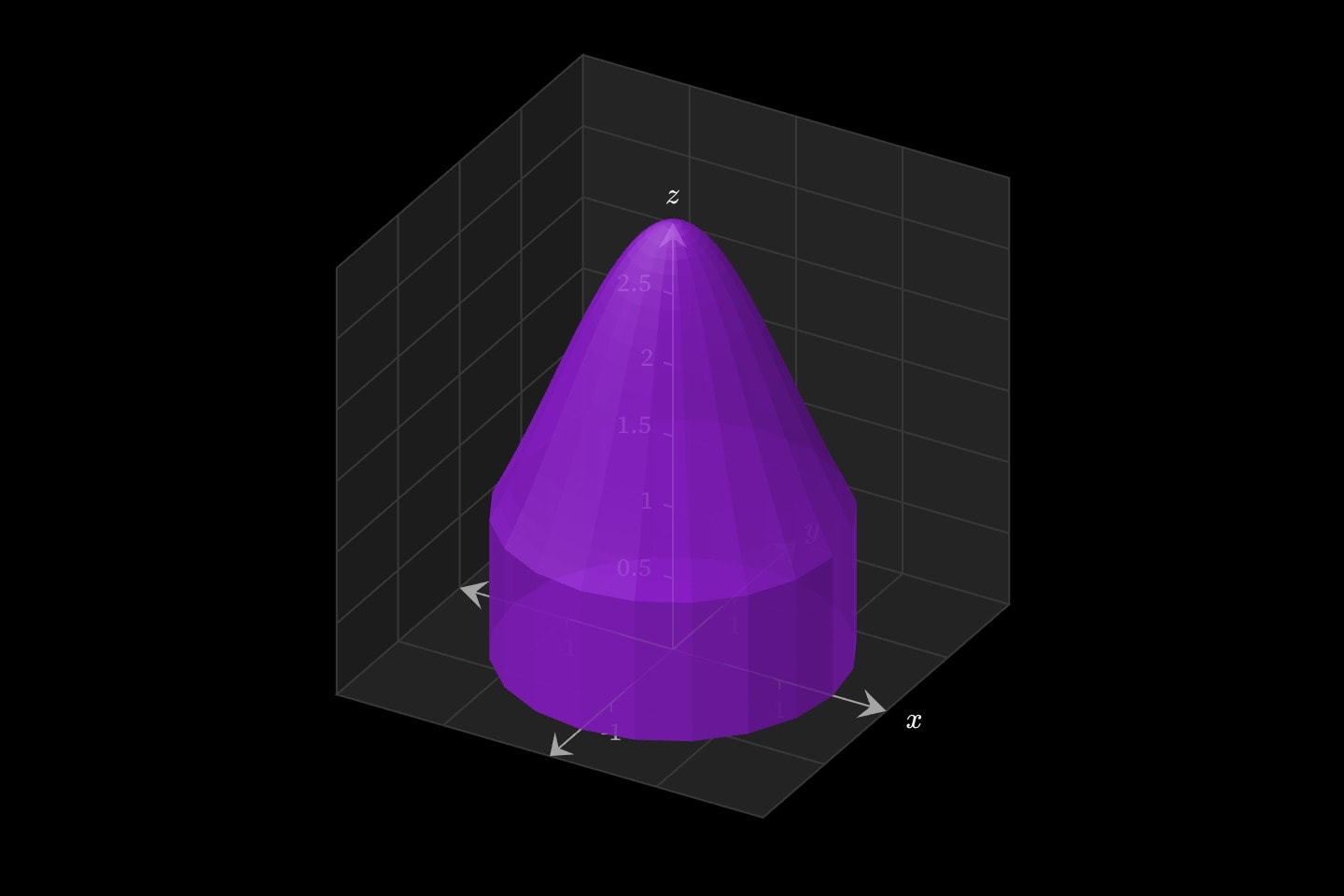
    solid(of: 3 * e^(-(x^2 + y^2) / 2); theta: [0, 2pi]; r: [0, 1.5]; colour: purple; opacity: 0.8)
}(
    x domain: [-2, 2]
    y domain: [-2, 2]
    z domain: [0, 3]
)